Hello, everyone!
I hope you’re doing well!
Today, I want to talk about a question I get all the time: What if my cat hates wearing clothes? Even before the sweater arrives, many customers ask me how to make sure their cat will actually like it. And honestly? I totally get it.
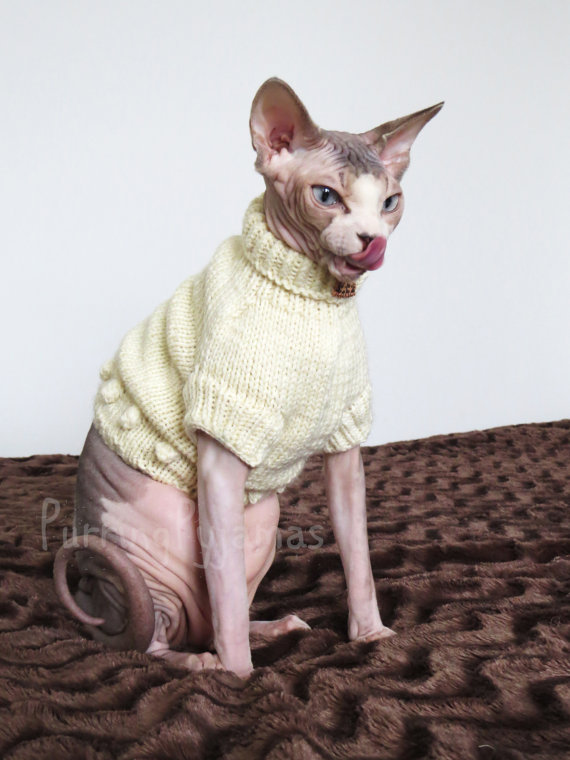
We’ve all seen it: the cat goes stiff like a board, dramatically flops over, or starts doing that “drunk walk” when you try putting a sweater on them. One of my own cats, Beliza (Rest in peace, sweetheart!) – who happily modeled her knitwear – at first acted like she’d been personally betrayed by a piece of yarn. 😄 So how did she go from hating pet clothes to enjoying them?
Let’s talk about it.

Understanding Why Cats React the Way They Do
If your cat flops over like a fainting goat the second you dress them, don’t panic – this reaction is surprisingly common! Many cats freeze, crouch low, or even walk sideways when first wearing clothes, not because they hate you or the sweater, but because the sensation is unfamiliar and confusing.
According to feline behaviorists, this response is linked to what’s called a “defensive freeze” – a natural instinct when a cat experiences a sudden change in body sensation or restricted movement. In fact, studies on feline proprioception (the sense of body position) show that cats are especially sensitive to anything that alters their balance or touches their fur in unusual ways.
Think of it like putting on a wetsuit for the first time – it’s not painful, just weird! But with short, positive sessions (paired with affection and treats), most cats quickly realize they can move just fine and may even begin to associate their cozy sweater with comfort and safety.
So, how do you turn a kitty fashion crisis into a fashion success story? Let’s go over some simple but effective tips and tricks to help your cat go from “Nope!” to “Meow-del” in no time!
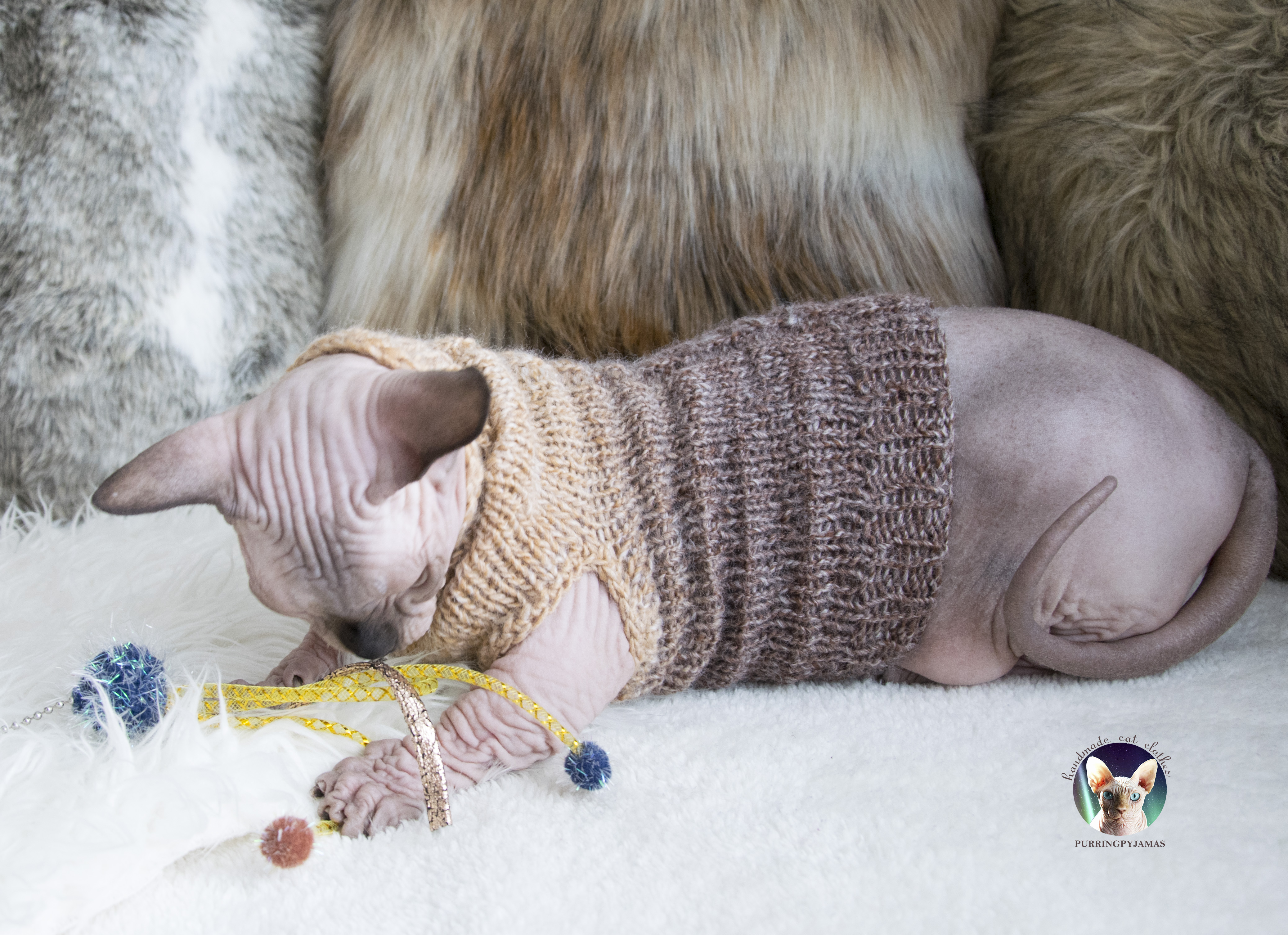
Treats, Treats, Treats
Treats are your secret weapon, and you’re the one holding them! Cats respond to positive reinforcement just like dogs do. So, when putting on or taking off the sweater, pair it with affection and their favorite snack. This helps your cat associate the experience with something good.
(A quick side note: Why don’t vet clinics offer cat treats like they do for dogs? We always bring our own. Cats deserve positive reinforcement, too!)
Keep It Short & Sweet
If your cat is new to clothing, don’t start with hours of wear. Begin with just 5 minutes, and gradually increase the time day by day. Always follow up with treats and praise. Within a week or so, your cat will likely feel more comfortable. It may seem like extra effort at first, but trust me, it pays off!
Pair It With Something Fun
Does your cat love a certain toy or game? Use it to your advantage! Playtime or affection while they’re wearing the sweater will help them focus on the fun rather than the unfamiliar feeling of the fabric.

Try the Sock Method First
You might be thinking, “Wait… aren’t you selling cat clothes?”
Yes, and I appreciate every single person who supports my small business. But I’ll always value honesty over a hard sell.
So here’s the real talk: before you invest in pet fashion, test the waters. Take an old sock, cut off the toe and make two small holes for the front legs. Voilà – your kitty has a practice sweater! You can do the same with the sleeve of an old shirt or sweater.
Just make sure it’s fitted, not tight, and always supervise your cat while they’re wearing it, especially if they’re new to the whole idea. This advice also applies to things like bandanas, collars, and harnesses.
Stretchy Fabric is Key
One of the reasons I hand-knit all my sweaters (besides the fact I’m obsessed with yarn) is because knitted fabrics are incredibly stretchy. Compared to fleece or jersey, handknit materials provide a more flexible and forgiving fit, which is especially important for active cats.
Also, my sweaters are seamless and lightweight to avoid bulk, helping even the most dramatic cat feel like their usual acrobatic self.

What Styles to Avoid for Beginners
When your cat is just starting out with clothes, it’s best to keep things simple and comfy. Avoid styles with hoods, full-length leg sleeves (especially ones that go past the elbow), or stiff seams that can limit natural movement. These extras may look cute, but they often feel overwhelming for a cat who’s not used to wearing anything at all.
Think of it like breaking in a new pair of shoes – you wouldn’t start with high heels! Go for sleeveless, soft, stretchy designs that let your kitty move freely and build confidence.
Want to dive deeper into finding the purrfect fit and style for your cat? I wrote a full post all about it – check out:
Dressed to Purrfection: A Complete Guide to Buying Cat Clothes
Signs Your Cat Is Getting Used to Clothing
So how do you know your kitty is starting to get the hang of it? Look for small but meaningful signs – like walking around more confidently, grooming themselves while wearing the sweater, playing, or even curling up for a nap in it. These are all signs your cat is adjusting and beginning to feel at ease. It may not happen overnight, but it does happen – just be patient and consistent.
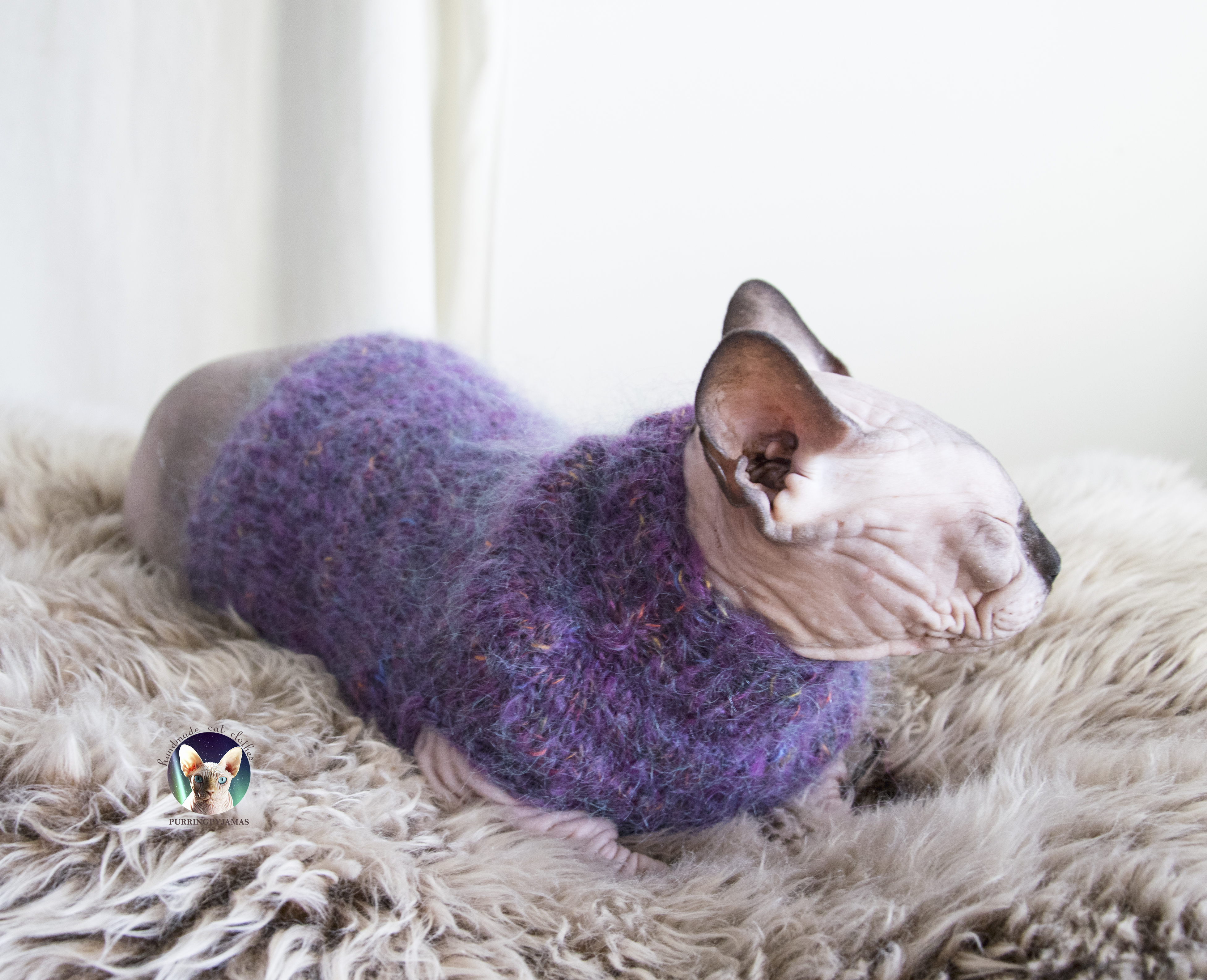
Celebrating Little Wins
Every bit of progress matters! Whether your cat wears their sweater for five minutes without flopping over, walks a few steps confidently, or even just tolerates the dressing process a little better – those are all huge wins. You’re building trust, one treat and positive association at a time. Celebrate those small victories – they mean you’re well on your way!
I hope you enjoyed this week’s post and found it helpful! Whether you’re new to pet clothing or just looking to make the experience better for your kitty, remember: patience, positivity, and the right approach make all the difference. 💕
Follow PurringPyjamas on social media to keep up with the newest releases, discounts, never-ending Sphynx cuteness, and more!
📸 Instagram: instagram.com/purringpyjamas
📘 Facebook: facebook.com/purringpyjamas
🛍️ Shop: purringpyjamas.etsy.com
































 Purring Pyjamas