Review: Flying Tiger Pet Food Catapult – Does It Work?

Hi, everyone! I hope you’re doing great! This blog post was written a little bit impromptu, because I was planning to write on a different topic, but yesterday I was doing a little bit of shopping, and decided to visit Flying Tiger. While over there, I noticed something I thought was quite hilarious – pet food catapult! On the package they show a dog as an example, but I was wondering if it would work for cats as well. It’s called “Pet food catapult” after all! I just HAD to try it out. Let’s see how it went!

1

Price. It was cheap, just like most things in Flying Tiger – I paid €4 for the pet food catapult.

2

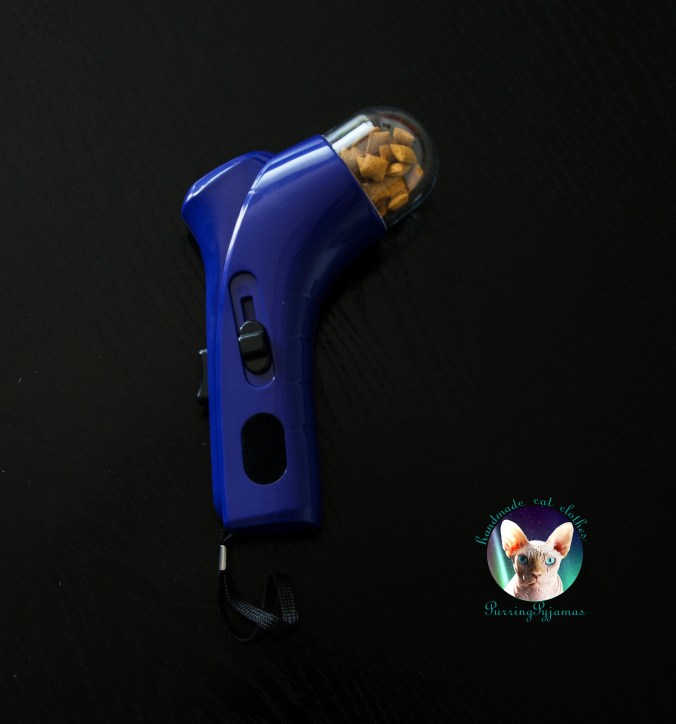
Looks & how it works. It’s made of plastic, and the front part (the little see-through part) comes off easily with a little twist, so it’s easy to clean and/or load the catapult with pet food. Then you simply push down the black button (see the picture) and press the black button next to it to “shoot” the food in the air.

3

How my cats reacted to it. Well, the thing is that they didn’t. But no, really! They could not care less about the food flying out of that catapult. They were sitting in front of me with those huge eyes asking for treats, but they just couldn’t understand that the food was flying out of the catapult and they need to go pick it up. I loaded it with quite big cat treats (Dreamies to be precise), but I think the main issue was that the food would fly out at a very high speed, and the cats simply wouldn’t notice it. If the treats landed on the floor, they’d react to the noise it made, but that’s all.
4

Some final thoughts and is it worth it. It’s hard to say whether it’s worth it or not. All of my cats didn’t understand it, but maybe they’re just not very smart, haha! 😀 It was only €4, so I don’t feel robbed, and, well, cats are beings that are very picky in general. It did not work for my cats at all, but it MAY work for your cat. Or maybe it works only for dogs. Or maybe it works for some pets only, while it also may not work at all. If you feel like trying it out – give it a go, but I personally won’t be using it.

Follow PurringPyjamas on social media to keep up with the newest releases, discounts, never ending Sphynx cuteness and more!
Instagram: instagram.com/purringpyjamas
Facebook: facebook.com/purringpyjamas
Shop: purringpyjamas.etsy.com

asta

Silver Vine for Cats: My Review + What You Should Know

Hello, everyone!

Today I’m revisiting a post I originally wrote almost a decade ago (yes, all the way back in 2017 – and now here we are in 2025!), back when I stumbled across something intriguing while shopping online – Silver Vine sticks.

As someone who loves discovering new enrichment tools for my cats, I was curious (and admittedly a bit skeptical) about Silver Vine and whether it was safe or effective. Since that time, I’ve grown quite a bit – I’m now studying feline nutrition and behavior – and I wanted to update this post to reflect what I’ve since learned.

What Is Silver Vine?

Silver Vine (Actinidia polygama) is a plant native to parts of Asia, often described as a stronger alternative to catnip. It contains compounds like actinidine and nepetalactol, which can trigger playful or euphoric behavior in many cats – even those who don’t react to catnip.

Unlike catnip, Silver Vine activates different pathways in a cat’s brain, and can even repel mosquitoes when cats rub it on their fur (source).

My Cats’ Reaction

Years ago, I found Silver Vine sticks on eBay and decided to give them a try. I paid about £5 for a pack (plus shipping) from a UK-based seller, assuming the quality would be better than buying from an Asian store. But the sticks arrived in generic Asian packaging – exactly the same as those sold directly by Asian sellers at a much lower price.

Lesson learned: Check the source, read reviews, and don’t assume local equals higher quality.

2

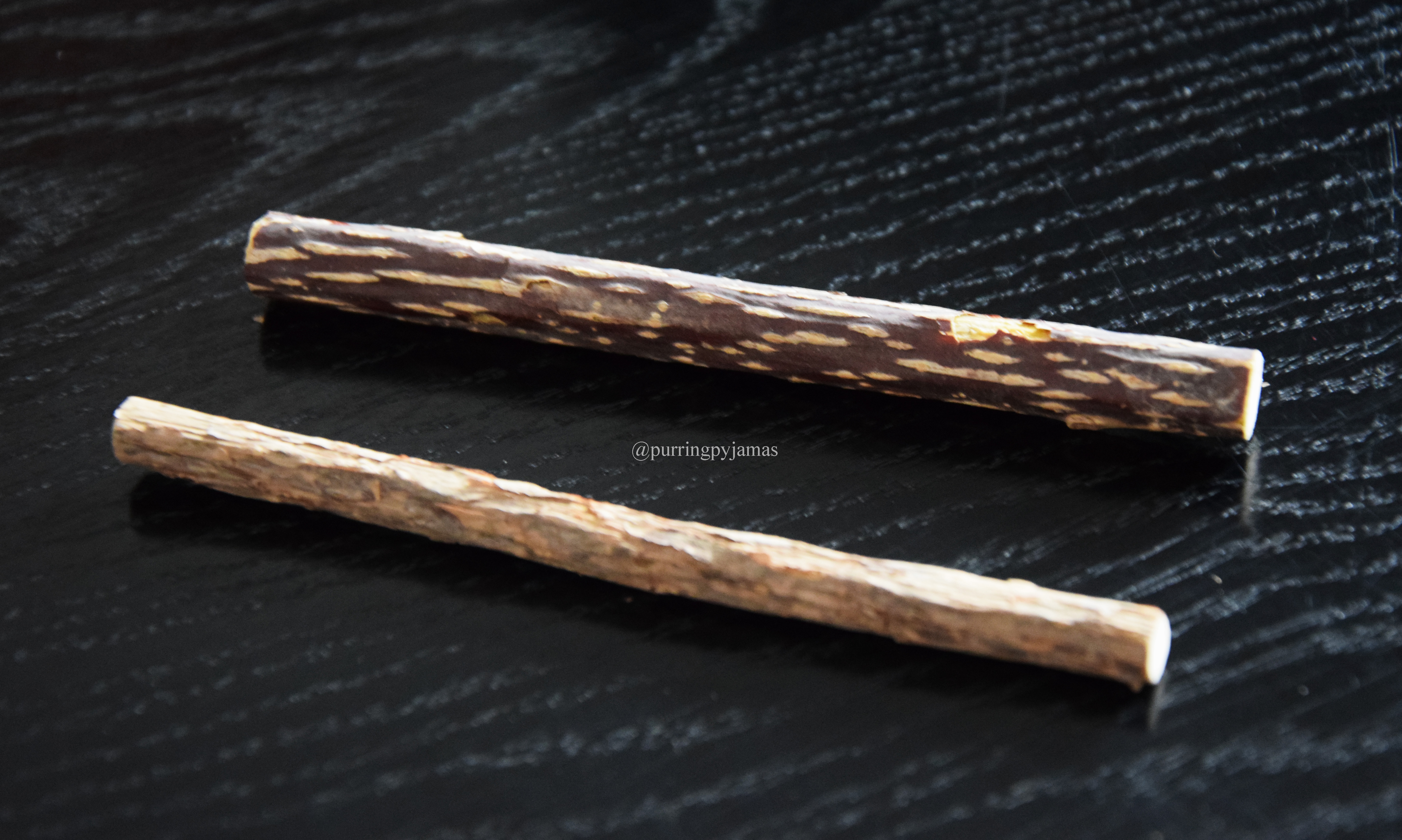
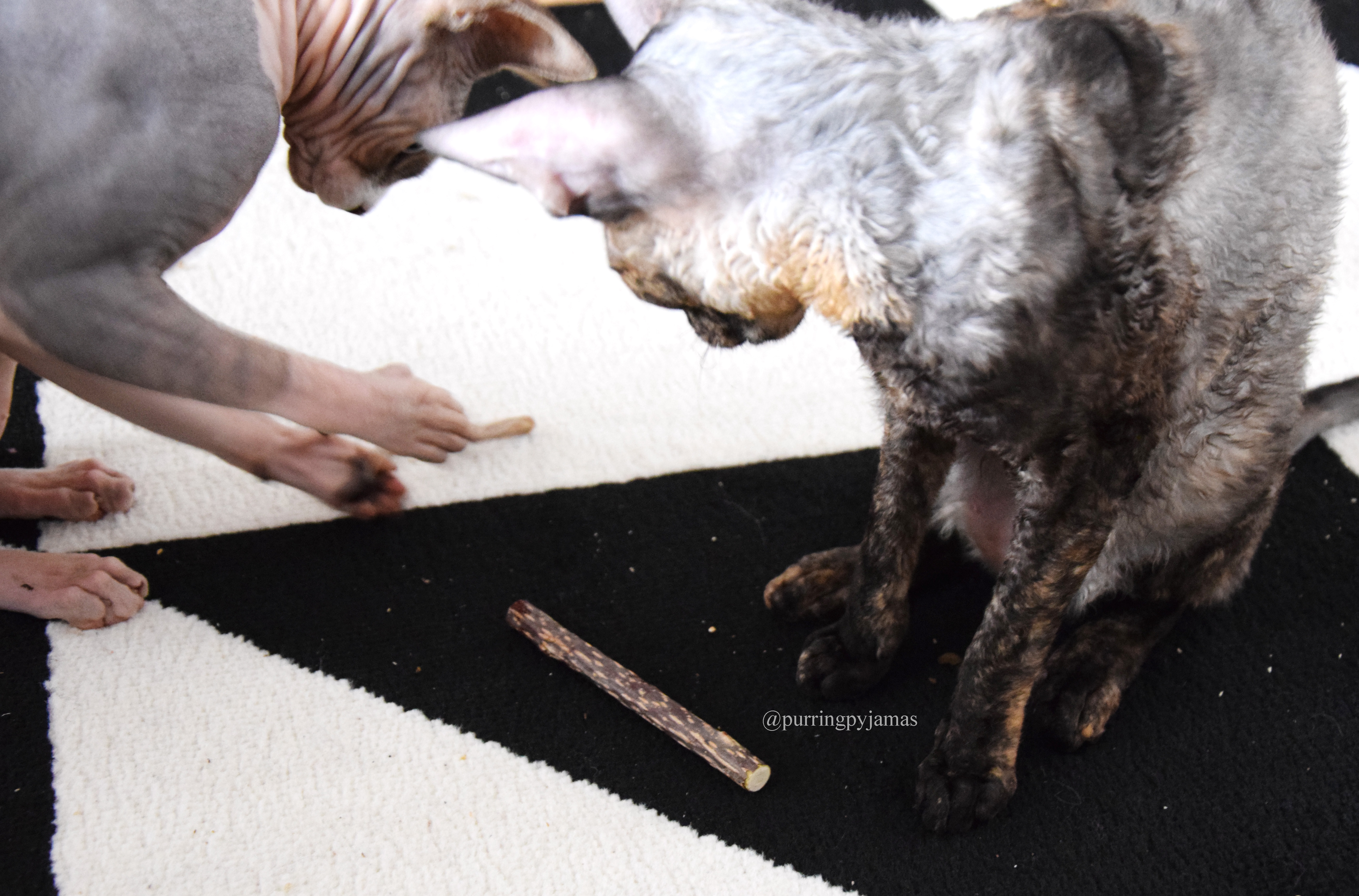
The sticks came in two sizes and were about 12.5 cm (5 inches) long. My cats loved them! They chewed, batted, rubbed, and carried them around the house. After a few months, they were still in decent shape, just a bit frayed.

4

Did they improve dental health? Honestly, I’m not sure. Chewing can help with oral hygiene, but silver vine sticks aren’t a substitute for proper dental care. Still, they’re a fun and affordable enrichment item!

Benefits of Silver Vine

  • High response rate – Up to 80% of cats respond
  • Natural enrichment – Promotes healthy play and stress relief
  • Stimulates the brain – Engages the reward system safely
  • Physical activity – Encourages movement and exercise
  • Safe and non-toxic – When used responsibly
  • Bonus: Potential mosquito-repelling benefits (source)

Safety & How to Use Silver Vine

  • Start with a small amount and observe your cat
  • Supervise during chew-stick play
  • Use 2–3 times per week max
  • Avoid giving to kittens under 6 months
  • Consult your vet if your cat is elderly, on medication, or has health issues

Most cats tolerate Silver Vine well, but it’s still a good idea to be cautious with any new enrichment item.

Where to Buy

Look for organic or clearly labeled Silver Vine products from trusted sellers. Avoid overpriced repackaged versions – you can often find high-quality sticks or powder from Asian sellers with excellent reviews and transparency.

Final Thoughts

Would I recommend Silver Vine? Absolutely – when used mindfully.

My cats enjoyed it, and I’ve since come to appreciate how useful it can be as a safe, natural way to engage their senses. As always, what works for one cat might not work for another, so go slow and stay observant!

I hope you found this review helpful! Wishing you and your cats a playful, purring-filled week. 🐾


Follow PurringPyjamas on social media to keep up with the newest releases, discounts, and never-ending Sphynx cuteness!
Instagram: instagram.com/purringpyjamas
Facebook: facebook.com/purringpyjamas
Shop: purringpyjamas.etsy.com


Disclaimer:
This post is based on personal experience as a cat owner and student of feline nutrition and behavior. It is not veterinary advice. Always consult a veterinarian before introducing new substances – including Silver Vine – into your cat’s environment.

DIY Cat Treats: Easy, Quick & Yummy

As a crazy cat lady, I always looks for something new for my cats. New toys, new scratching posts, new blankets, new beds… You name it, I got it. 😀 I also have quite a few books about cats, and I finally decided to get it together and make some use out of them. I flipped through one of the books I bought back in December of 2016 – it’s called “Treats for your cat”. Basically, there you can find a lot of DIY toys, pet carriers, etc. There’s also quite a few recipes with different meals you can prepare for your cats, and one of them caught my eye – it’s simple, quick and doesn’t require 15 weird and fancy products. It’s called “Christmas Cookies”, but believe me – your cat(s) will love these treats all year ’round.

pp13


These cat treats have fish in them, and I know that there has been a little bit of a fuss about giving fish to your cat. Generally, moderate amounts of fish will provide your cat nutrients, however, it’s best to serve it cooked as raw fish contains thiaminase. It’s OK to give it to your cat as a treat sometimes, but it shouldn’t be a big part of your cat’s daily diet. With that little bit out of the way, let’s get into the recipe!

pp4

So, I tweaked the recipe a bit to suit my cats’ wishes, so I am sure that there will be no harm if you use something different too. The basic recipe for these treats is:
-225 g/8 oz plain wholemeal flour
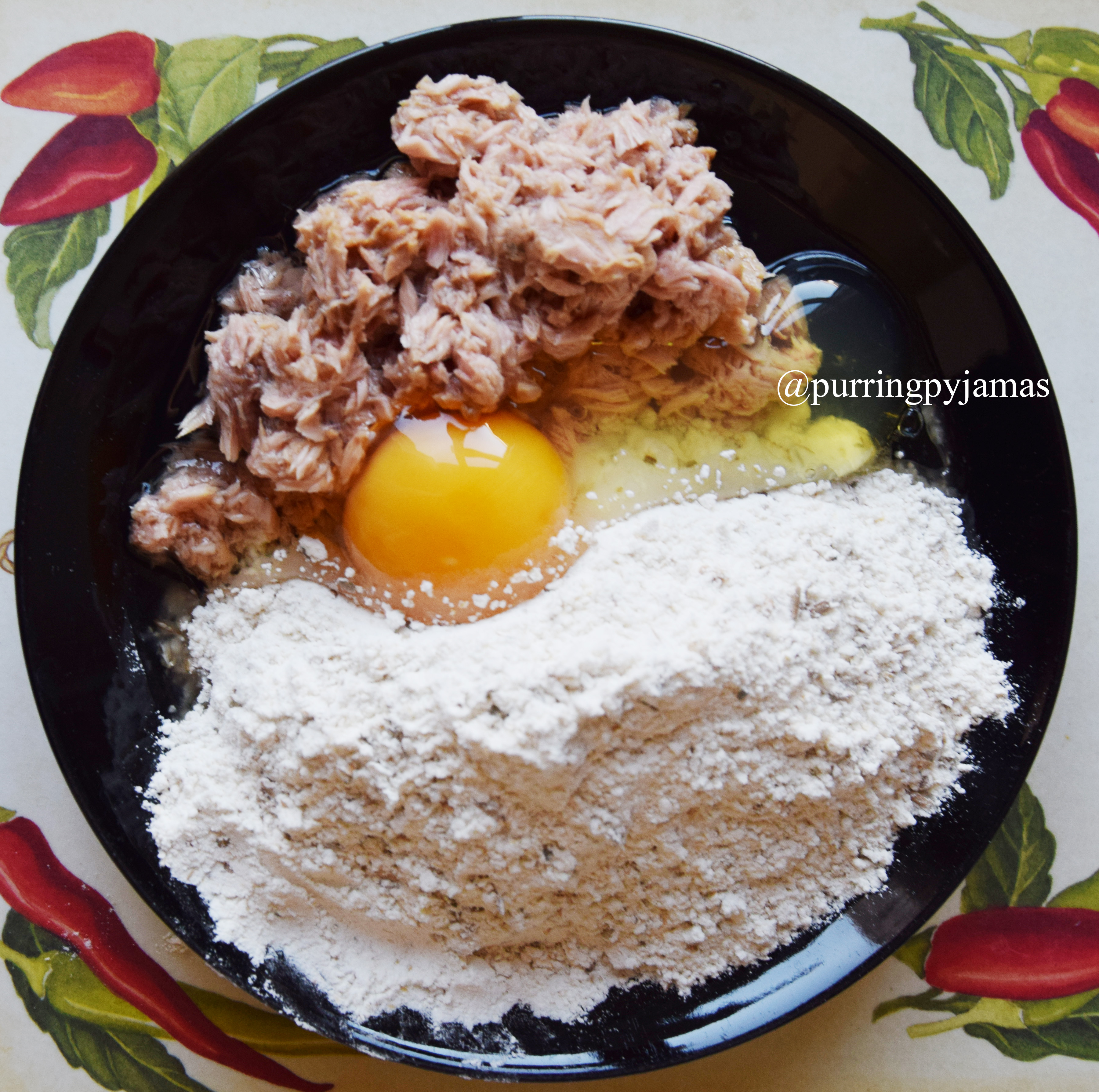
-1 x 200 g/7 oz can pressed cods roe (I used tuna fish instead)
-90 g/2 oz vegetable fat
-1 egg

I think that unless you have 10+ cats, you should split all the amounts in half – I have 3 cats, made half of the amount written and there will easily be enough treats for quite a few days. These treats are yummy and cats love them, but they’re also very filling and your cat probably won’t be able to eat more than 2-3 treats at once (all depends on the size of treats of course).

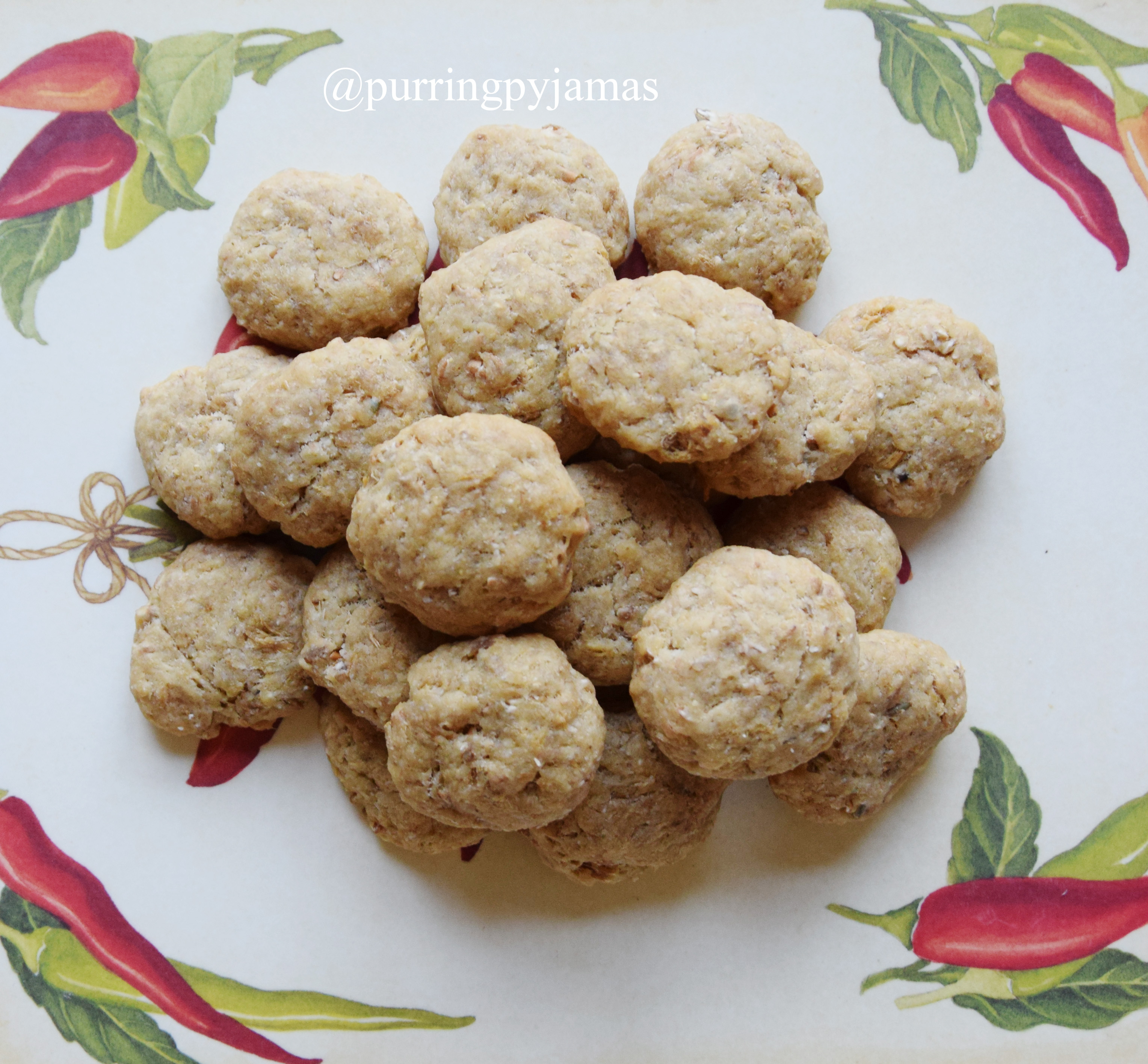
So, you have the recipe, what do you do next? Well, firstly, preheat your oven to 180 degrees Celsius/350 degrees Fahrenheit. Line the baking tray with a parchment paper (baking sheet). While the oven is heating, make the treats: mix together flour, your fish of choice, vegetable fat and egg. You can add a little bit of water if the mixture is too stiff. And here comes in the creative part of this process: you can choose what shape treats you want to make. I simply took little balls, pressed them a bit and made little button like treats, but you can do something more creative! In the book, it suggests to roll out the dough and cut out the treats with a cookie cutter. Put the treats on the baking sheet, and once the treats are all made and the oven is heated, put them to bake until golden and crisp. I baked them for about 15-20 minutes.

pp1

Once the treats are done, take them out of the oven and leave to cool down. Then give them to your cats and see if they like it! I am sure they will, because my Sphynxes generally don’t eat fish, but this time they made an exception!

pp11

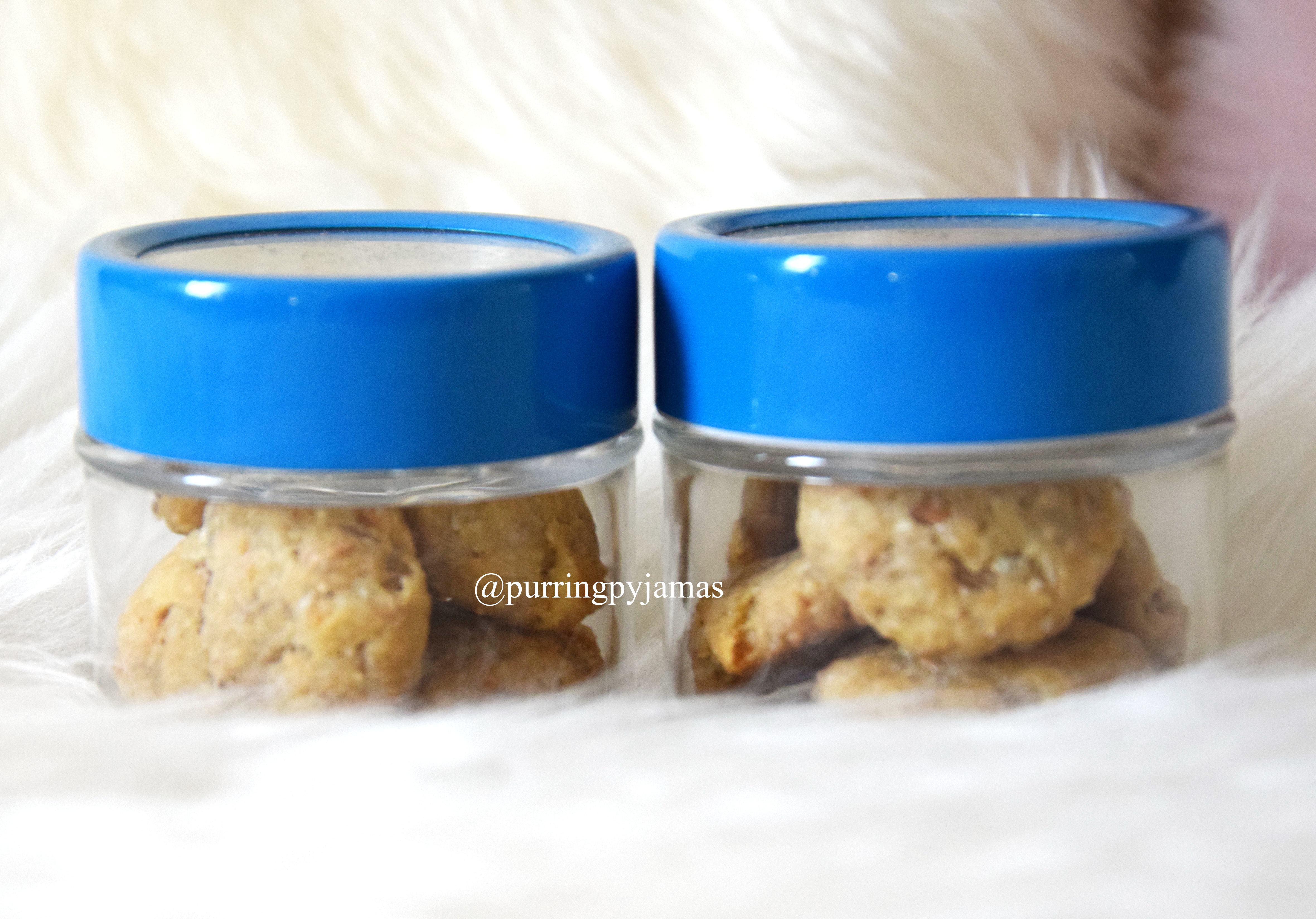
I store the treats in these little glass jars.

pp12

If you have any questions regarding the recipe, please leave them down in the comments and I will get back to you! I hope you all have a wonderful day. 🙂

Follow PurringPyjamas on social media to keep up with the newest releases, discounts, never ending Sphynx cuteness and more!
Instagram: instagram.com/purringpyjamas
Facebook: facebook.com/purringpyjamas
Shop: purringpyjamas.etsy.com

asta