It is that time of year again — the sun is out, the tan is here, the temperatures are rising, and everyone is reaching for a cold drink. Everyone, that is, except your cat, who is probably rolling around on the softest sofa or blanket they can find, completely unbothered by the concept of hydration.
Here’s the thing: cats are notoriously bad drinkers, we all know that. Not because they’re being difficult — although that is also sometimes true — but because of biology. Their desert-dwelling ancestors got most of their water from prey rather than from drinking, and domestic cats have inherited that same low thirst drive thousands of years later. A cat on a dry kibble diet may already be mildly dehydrated even with fresh water available, simply because their bodies weren’t designed to rely on drinking as a primary water source.
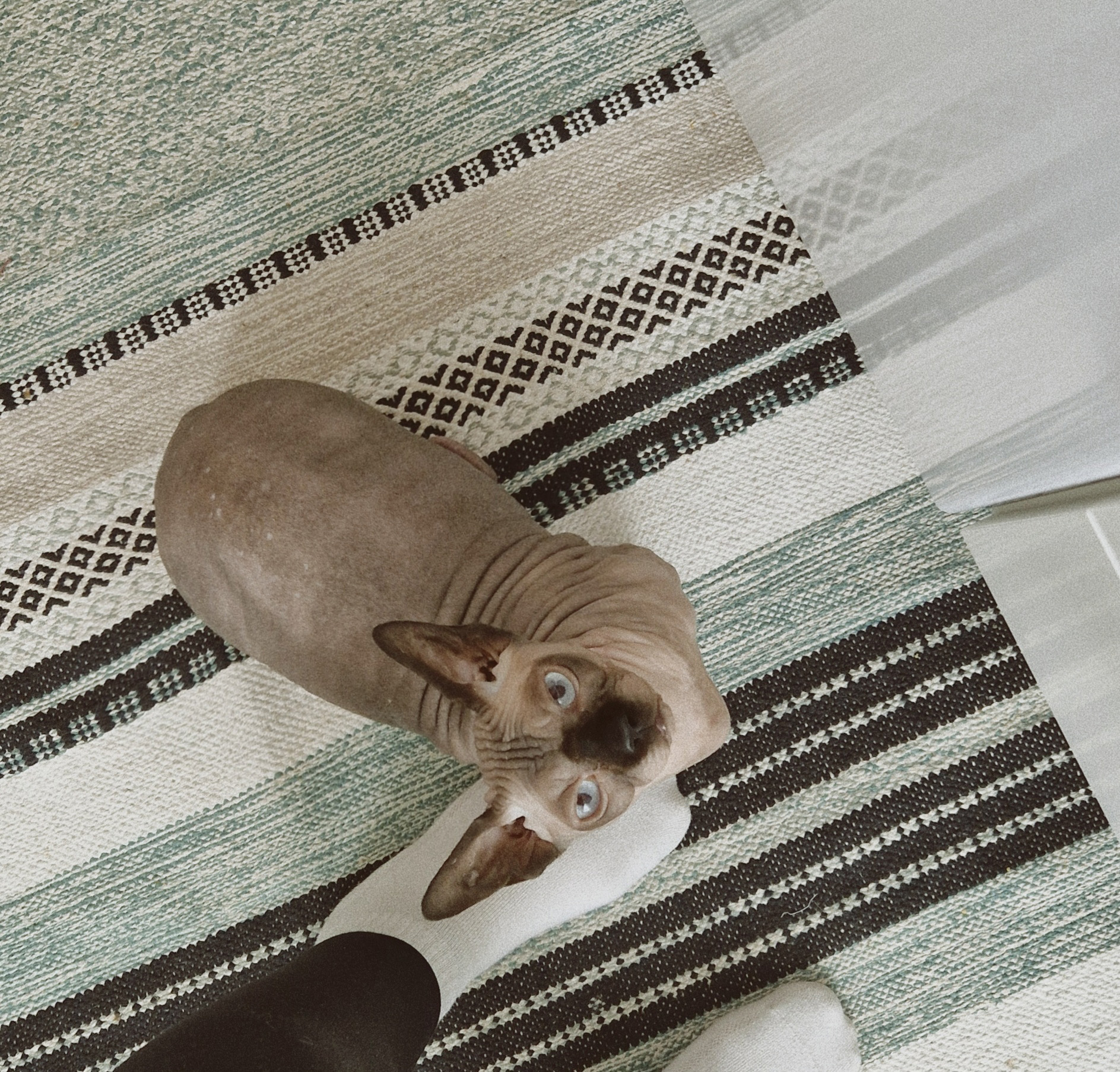
I am lucky — my cat Jupiter is a genuinely good drinker. I regularly see him at his water bowl throughout the day and even during the night. But even my generally well-hydrated boy has his off days, and on those days I have a whole bag of tricks to make sure he gets enough liquids. This post is that bag of tricks — practical and Jupiter-tested (aka picky-eater approved).
To understand why getting enough liquids into your cat matters, it helps to understand why they’re bad at drinking in the first place.
As I mentioned earlier, domestic cats evolved from desert-dwelling ancestors who lived in arid environments with scarce water sources. Rather than drinking from rivers or ponds, their wild predecessors got up to 70-75% of their daily water requirements from the prey they caught and ate; as a result, cats developed a low thirst drive as their bodies simply weren’t designed to rely on drinking as a primary hydration source. And thousands of years of domestication haven’t changed that at all! Your cat sitting next to a full water bowl and ignoring it isn’t being difficult — it’s just being a normal cat.
The problem is that most modern domestic cats are no longer eating moisture-rich prey. Dry kibble contains only about 6-10% moisture compared to the 70-75% found in fresh prey, which means a cat eating primarily dry food may already be mildly dehydrated even when fresh water is always available. Low-level, long-term dehydration often goes unnoticed until it starts causing real problems.
Oh, and one more fun fact before we move on: cats are also just genuinely inefficient drinkers! They have difficulty seeing still, transparent water in a bowl as their vision is optimized for detecting movement rather than static transparent surfaces, and they have a blind spot directly under their chin which makes seeing water at floor level challenging. And when they lap water they only end up with about 3/100 of a teaspoon per lap, so it’s a miracle any of them stay hydrated at all, honestly!
So what happens when a cat doesn’t drink enough and is chronically dehydrated? The short answer is nothing good.
The most common consequence of chronic mild dehydration in cats is urinary tract issues, such as bladder inflammation, urinary crystals, bladder stones, and urinary tract infections. Concentrated urine sitting in the bladder for extended periods creates the perfect environment for these problems to develop. Male cats are particularly vulnerable due to narrower urethras, making hydration a medical priority rather than just a lifestyle preference.
Long term, the kidneys take the biggest hit: kidneys need adequate water to function properly — filtering waste, regulating electrolytes, producing urine… A cat whose kidneys are chronically working with insufficient water is a cat whose kidneys are working much harder than they should be. Chronic kidney disease is one of the most common health issues in older cats, and while hydration isn’t the only factor, it’s a significant one.
And in summer specifically, when temperatures rise and cats are losing more moisture just by existing in the heat, all of these risks become more relevant. A cat who drinks adequately in winter may not be drinking enough in July.
The good news? There’s a lot you can do about it, and most of it is easier than you’d think!
Before we get into what to put IN the water, let’s talk about the water itself — because how you present it matters more than you might think!
Water temperature
Cats can be very particular about water temperature. Jupiter, for example, prefers his water slightly lukewarm — not cold, not warm, just slightly warmer than the room temperature. Watch your cat and try experimenting — some prefer cold, some prefer lukewarm, some genuinely don’t seem to care. But if your cat is a reluctant drinker, temperature might be worth playing with!
Change the water regularly
This one sounds obvious but makes a big difference! I change Jupiter’s water at least once, sometimes twice a day — I wash his bowl and refill it with fresh water every time. Cats like fresh things: fresh food, fresh water, fresh blankies, fresh laundry to immediately sit on. Stale water sitting in a bowl all day is less appealing than fresh water, and cats’ sensitive noses will absolutely notice the difference!
Bowl material
Ceramic or stainless steel bowls are generally preferred over plastic: plastic retains odors over time and can make water taste different to sensitive cat noses. Jupiter has always had ceramic bowls and has never complained.
Bowl placement
Research suggests that cats instinctively prefer their water source away from their food — an evolutionary holdover from wild ancestors who knew that prey could contaminate a water source. It’s worth trying if your cat is a reluctant drinker. Jupiter, however, has never read this research and couldn’t care less; he eats by his water bowl, which results in him regularly eating half his meal, taking a few sips of water, and returning to finish his food, which I find very amusing! I do keep his puzzle mat and felt feeding mat a safe distance from the water bowl, but purely for practical reasons — Jupiter likes to dig enthusiastically with his paws, and anything within range will inevitably end up IN the water bowl. So as with everything cat-related: try it, see if it helps, but don’t stress if your cat ignores the theory entirely.
Moving vs still water
You’ve probably heard that cats prefer running water, and there’s actually research behind this. In the wild, moving water is generally fresher and less likely to be contaminated than still water, so cats evolved an instinctive preference for it. Many cats are genuinely more attracted to fountains and running taps than to a still bowl.
However — and I say this as someone who has watched Jupiter occasionally wander into the bathroom during my skincare routine to sample lukewarm tap water from my palms — not every cat is enthusiastic about running water. Jupiter will try it if it’s offered, drink a little, and be on his way. His still water bowl holds equal appeal, so every cat is different.
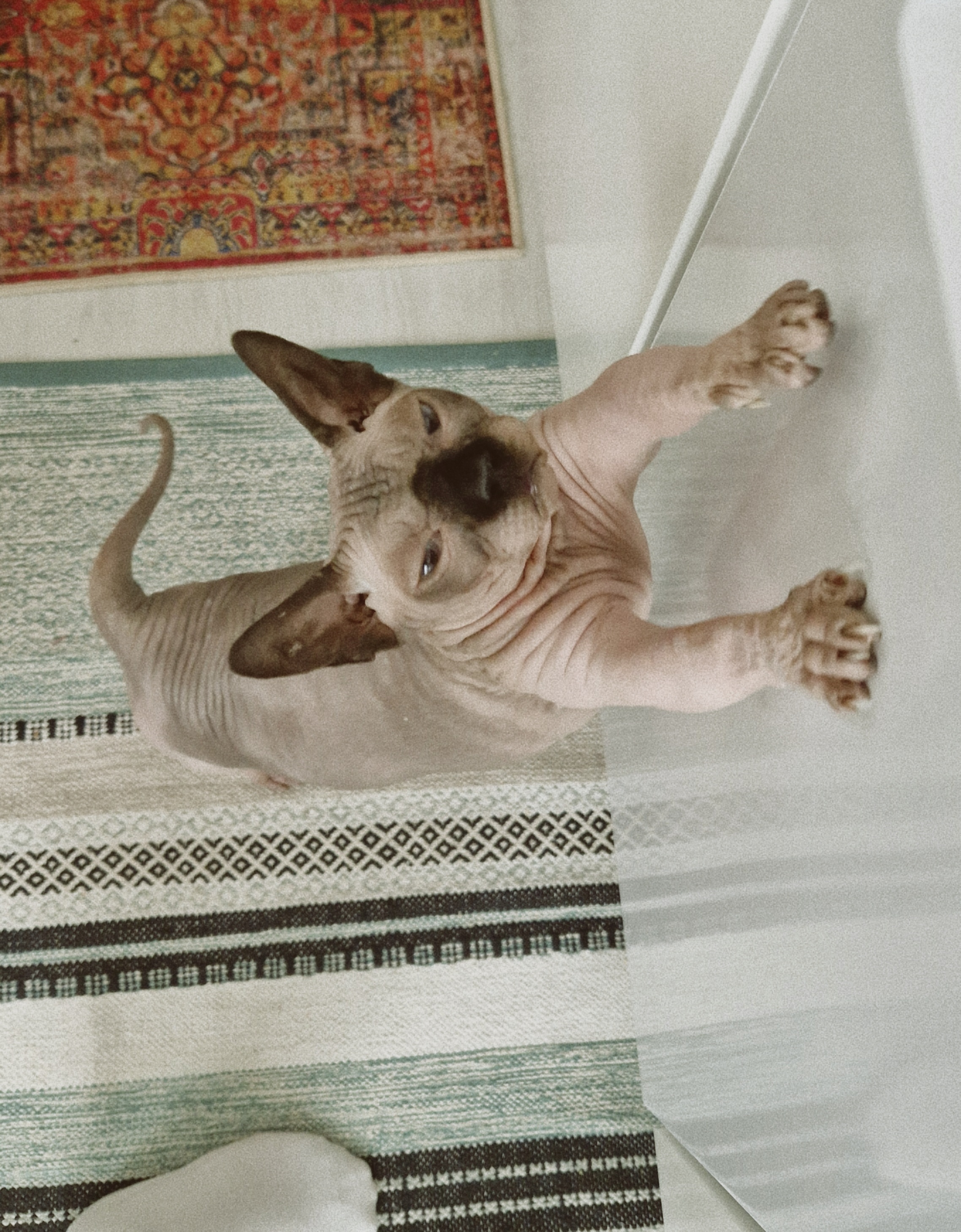
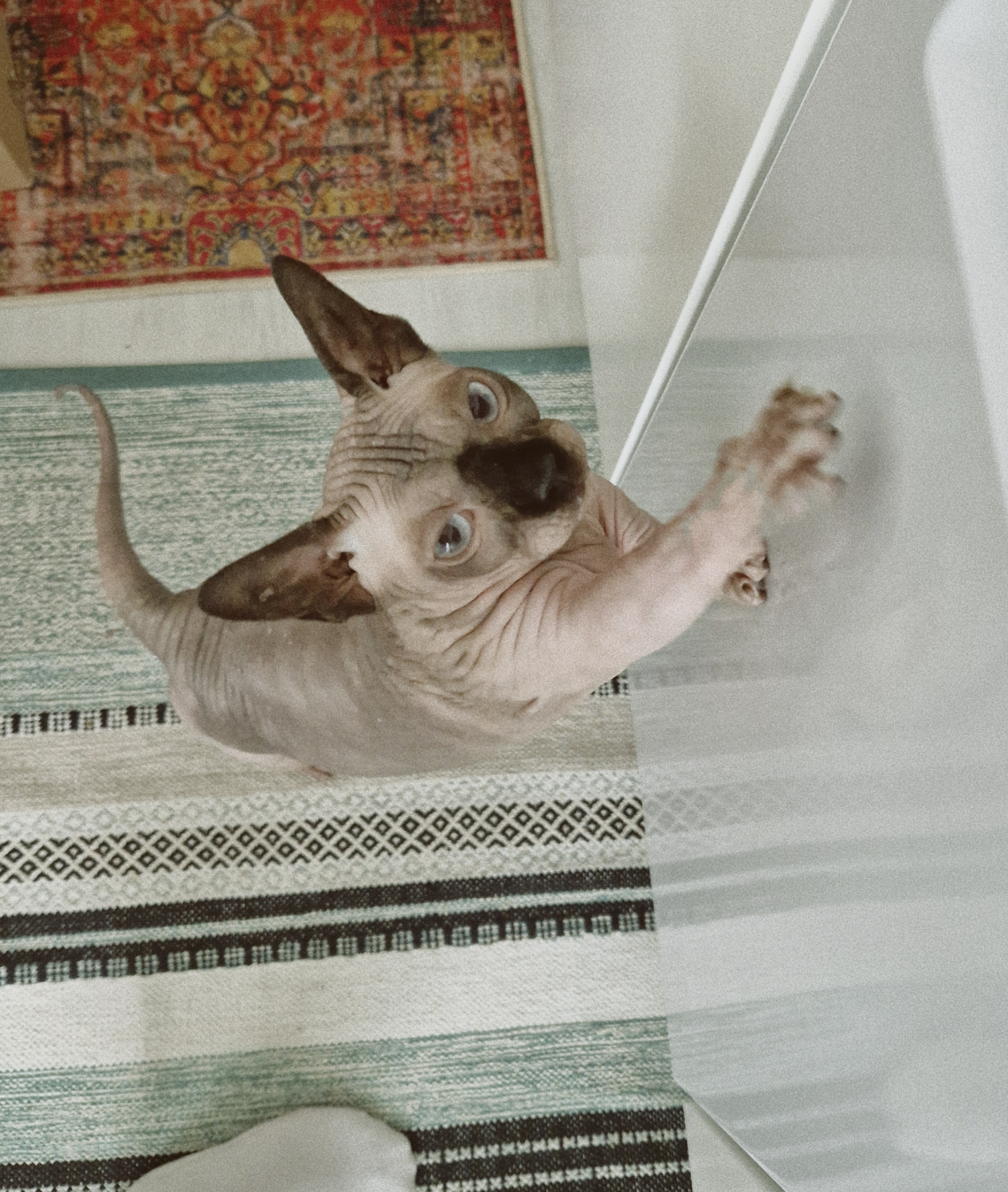
As for cat water fountains — I’ve genuinely considered getting one for Jupiter. But honestly? I have my doubts he’d use it significantly more than his regular bowl. And beyond that, I have a very specific set of concerns about fountains that I suspect some of you will relate to: electronics near water, batteries potentially leaking into the water, filter maintenance, the general paranoia of leaving an electrical device running unattended near a cat. Or maybe it’s just me being paranoid! Regardless, it’s just not for me, and that’s okay.
If your cat is a reluctant drinker and you haven’t tried a fountain yet, it’s absolutely worth trying — many cats genuinely drink significantly more with one. But if your cat is like Jupiter and views running water with complete indifference, don’t feel like you’re failing them by skipping it. There are plenty of other ways to get liquids in, and we’re about to get into all of them!
The golden rule: mix water into everything
Before I get into specific products and tips, here is the single most useful piece of advice I can give you: whatever you’re giving your cat — mix some water in. Wet food? Add water. Creamy treat? Add water. Fish loin? Add water to the packet and swish it around. Soup? Well, that one’s already liquid, but you can totally add water to that too (I definitely do haha)!
Cats often don’t notice — or don’t care — that their food is slightly more liquid than usual. Jupiter certainly doesn’t! A treat is a treat, regardless of its consistency, and every little bit of extra liquid adds up over the course of a day.
Now let’s get into the specifics.
Adding water to wet food
If your cat eats wet food — brilliant! Wet food contains around 70-80% moisture compared to dry kibble’s 6-10%. But you can go further! When I give Jupiter wet food, I add a small amount of water and mix it in. He eats it exactly the same way he would without the water, completely unbothered by the more watery consistency.
Start with a small amount — a teaspoon — and see how your cat responds; most cats don’t notice or don’t care. If they do notice and seem put off, try warm water rather than cold, which blends more naturally into the food and is less of a temperature shock.
I recently came across a video on social media where someone mixed an entire creamy treat into a small glass of water and offered it to their cat to drink. The comments under the video were fascinating! Some cats apparently drank it enthusiastically and promptly threw it back up from drinking too much too fast, others refused it entirely because they prefer their treats concentrated rather than diluted, and a few owners said they’d give it a try. It’s a creative idea, but I personally prefer the “add water to the treat” approach rather than “add treat to a glass of water”, and not just because Jupiter would look at a glass of watered down treat with complete look of betrayal haha.
The practical issue is this: wet food and wet treats mixed with water follow the same food safety rules as any other wet food — they shouldn’t sit out at room temperature for more than an hour or two before bacterial growth becomes a concern. So if your cat doesn’t drink the whole glass quickly, you’re left throwing it away. Mixing a small amount of water directly into the treat means your cat is much more likely to finish it in one sitting, which is both safer and less wasteful.
Disclaimer: None of the products mentioned in this post are sponsored, and there are no affiliate links here. All recommendations are based on my own research and personal experience — I’m not getting paid to promote anything.
The creamy treat trick
Which brings me to my preferred approach, and honestly one of my favorite hydration hacks. Creamy squeeze treats — the kind that come in little tubes or pouches — are already a liquid-ish consistency. Which means they are PERFECT for adding water to!
Here’s what I do: squeeze the treat into a small bowl, add approximately one tablespoon of water, and mix well. Jupiter sees absolutely no difference. A treat is a treat, and he licks the bowl clean every single time.
If your cat hasn’t encountered watered down treats before, start small — a teaspoon of water rather than a tablespoon — and work up gradually. The goal is maximum liquid with minimum cat suspicion!
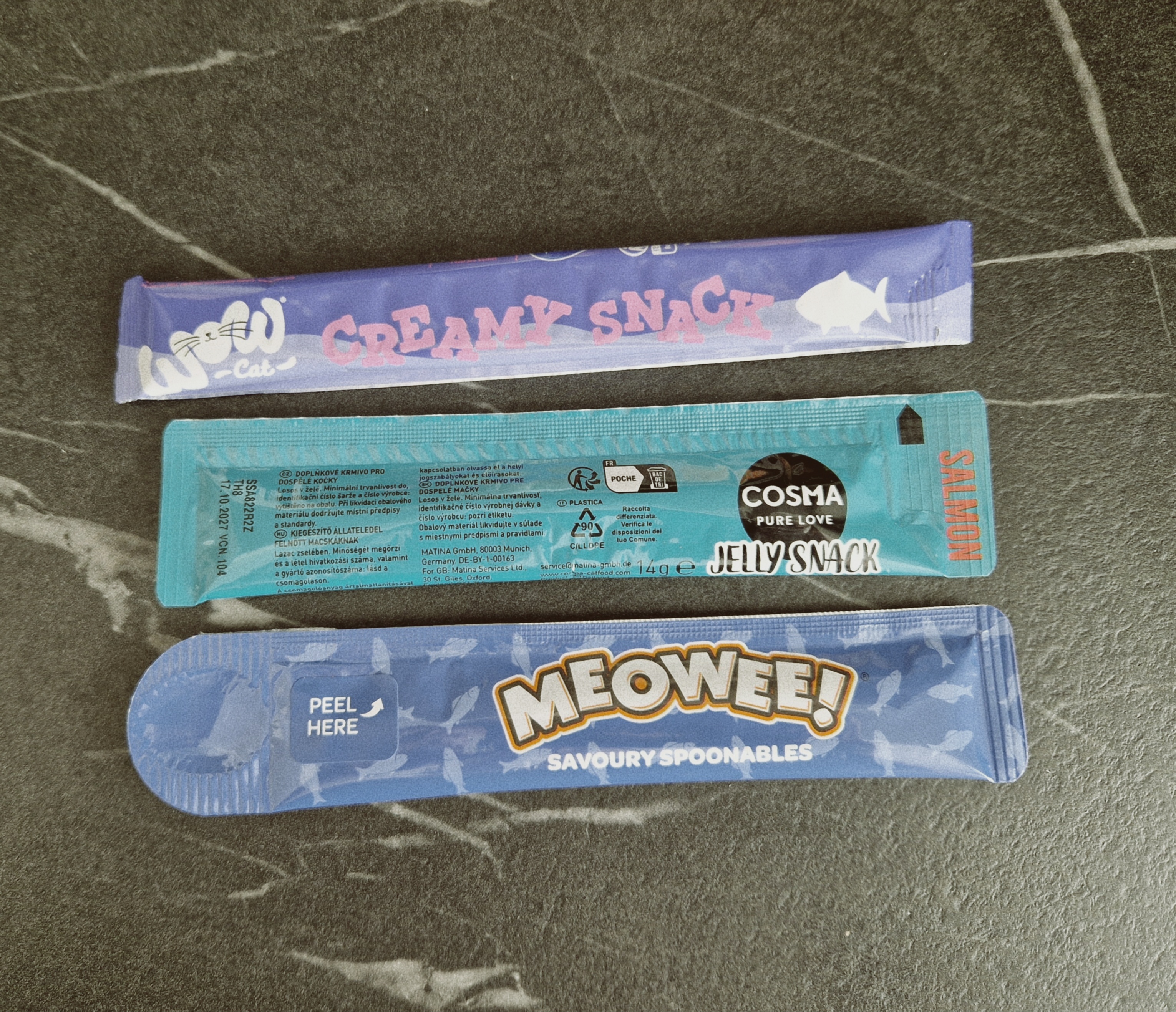
These are Jupiter’s favorite creamy treats — any brand works for the water trick, but these are the ones that pass his quality control:
Meowee! Savoury Spoonables (Available in Europe and North America)
A grain-free, low fat creamy treat made with real tuna or chicken, no artificial colors, flavors or preservatives, and containing taurine and vitamin E. Comes with an integrated spoon which makes it easy to squeeze into a bowl for the water mixing trick. Jupiter approves.
Wow Cat Creamy Snack
Grain free, no salt, no sugar, only 7kcal per pouch — and notably contains either inulin (a prebiotic!) or taurine depending on the variety. High moisture content already, which makes it an excellent base for adding even more water. Made in Germany. Available for purchase on Zooplus.
Cosma Jelly Snack
Fine chicken, tuna or salmon in a light jelly — grain free and completely natural. The jelly consistency means it already has a higher liquid content than many treats, making it particularly good for the water mixing trick. Available in convenient portion pouches. Cosma is available for purchase on Zooplus.
The packet trick — do NOT discard the packet!
Okay, this one I am very passionate about, because it is so simple, yet so effective!
When you give your cat a fish loin, a pouch of wet food, or really any treat that comes in a packet — do not throw that packet away immediately. There is liquid in there. Flavored, fishy, meaty, absolutely irresistible-to-cats liquid, and you are about to pour that liquid gold down the sink!
Here’s what you do instead: once you’ve emptied the main contents into your cat’s bowl, add a small amount of water into the empty packet. Close it, swish it around thoroughly, and then pour that liquid goodness over your cat’s food.
Jupiter’s reaction to this every single time is one of my favorite things — he goes straight for the liquid first, before he even touches the solid food. Drinks it all up immediately! Then eats his loin/pieces of food. It is the most enthusiastic I ever see him about hydration, and it costs exactly nothing extra.
I do this with almost everything — fish loins, wet food pouches, treat packets… You’re not wasting any product and your cat gets extra flavorful liquid. Two birds, one stone, zero extra cost!
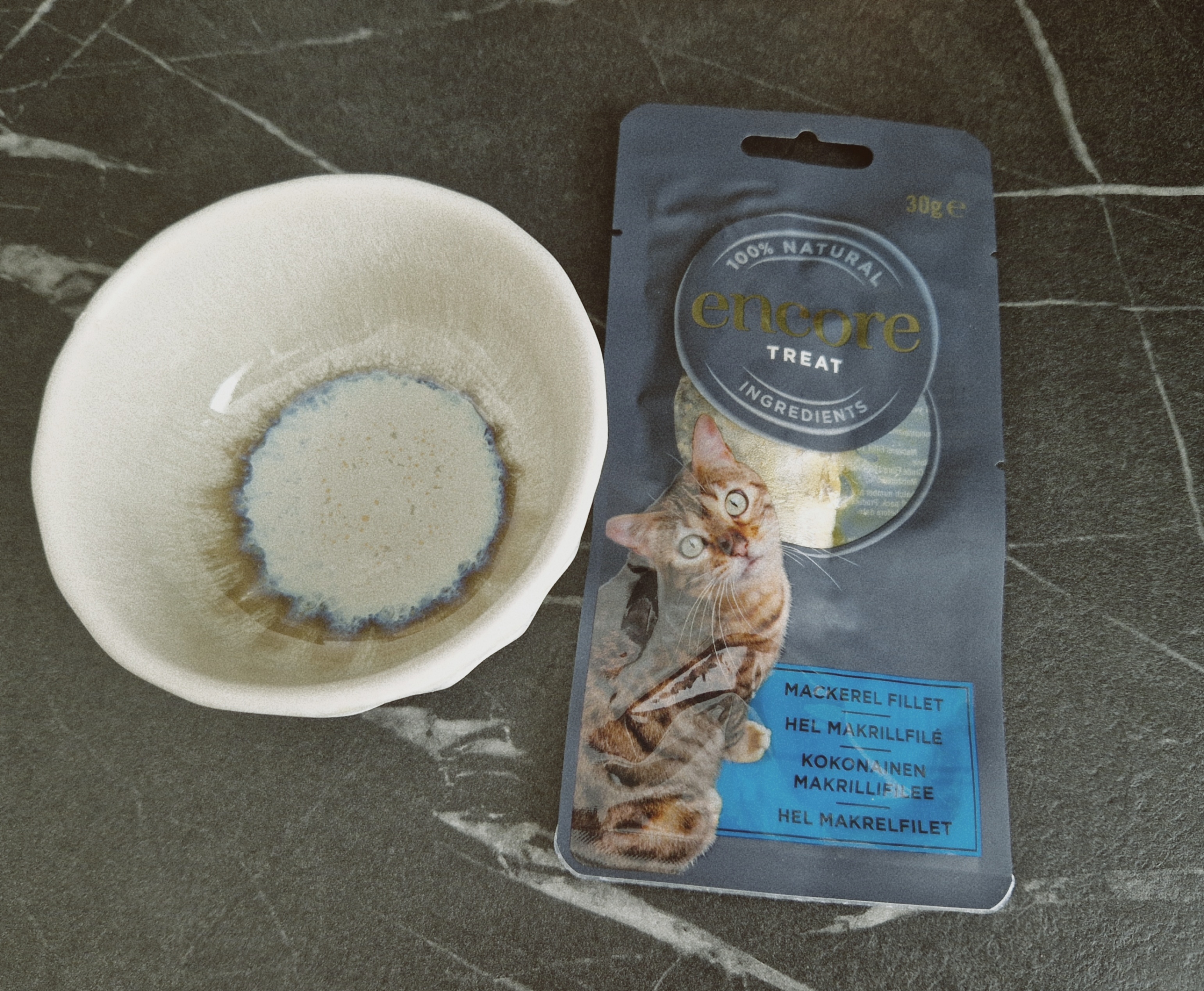
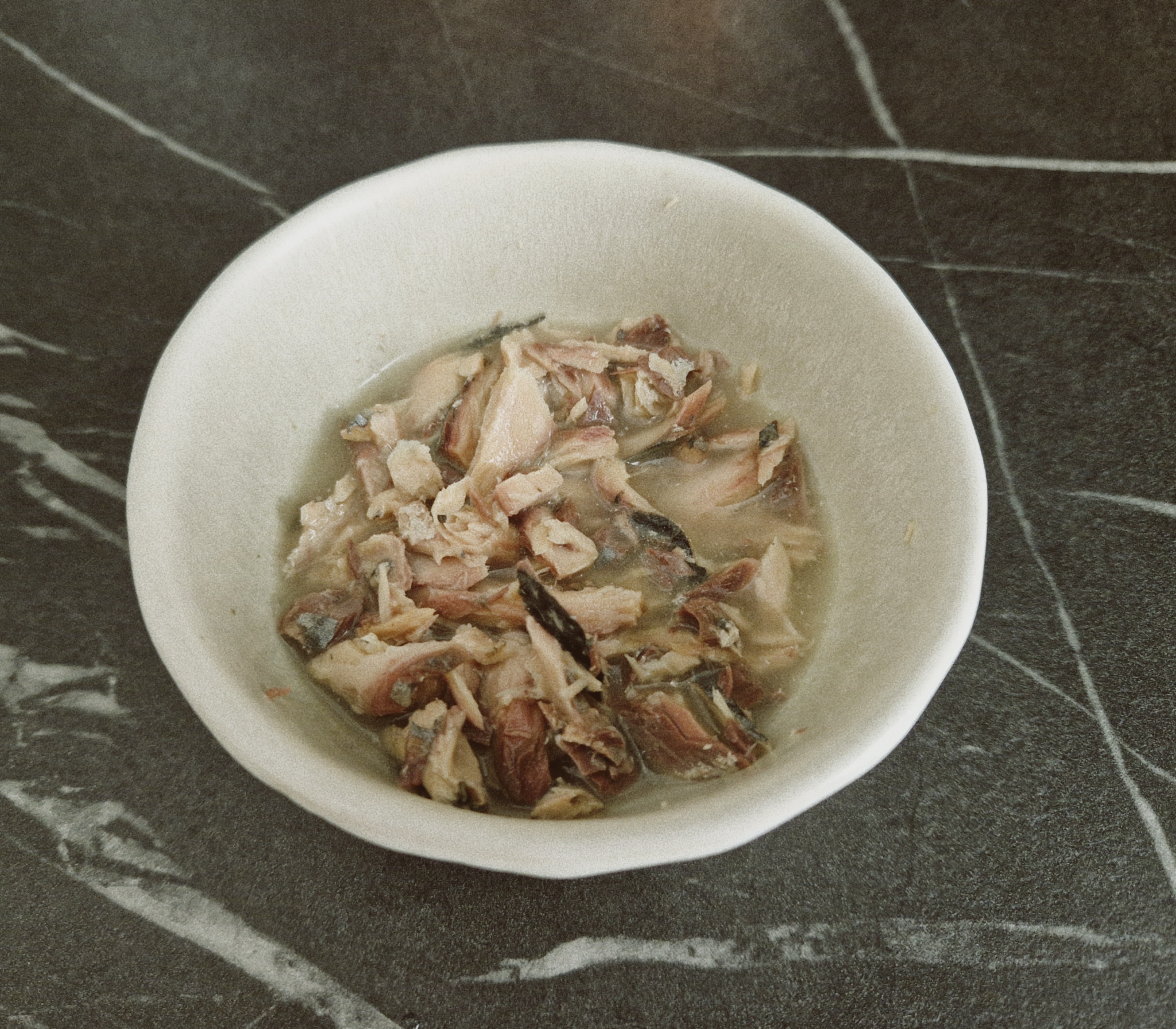
Jupiter’s favorite fish loins
Speaking of fish loins, here are Jupiter’s favorites. Both are single ingredient, completely natural, grain free and additive free, which makes them a great lunch option or treat. I crumble them into pieces in his bowl, do the packet trick for the liquid, and serve. He demolishes them in minutes every time!
Encore Cat Loin Mackerel
100% natural mackerel fillet — single ingredient, no sugar, no grain, no artificial additives. High in natural protein to support muscles. Can be served whole, in pieces, or as a food topper. Jupiter gets his crumbled with packet juice on top, of course.
Applaws Cat Mackerel Loin (Available in Europe and North America)
100% mackerel fillet, hand cut, no additives whatsoever. High in animal protein and naturally rich in unsaturated omega fatty acids which support skin and coat health. Grain free, sugar free, suitable even for elimination diets. Another Jupiter staple.
Applaws Cat Salmon Loin (Available in Europe and North America)
Same Applaws quality as the mackerel version but with 100% natural salmon — rich in omega fatty acids, high in animal protein, completely additive free. A nice variation to rotate with the mackerel so Jupiter doesn’t get bored of the same thing. Which he, as a picky-boy, absolutely would!
High moisture treats
Cativia Prebiotic Pudding
Another staple in Jupiter’s hydration routine is the Cativia Prebiotic Pudding — and this one earns its place for more than just its moisture content! It’s a creamy, pudding-style treat with a high moisture content that contributes directly to fluid intake, a lactose-reduced recipe (not lactose free, worth noting — but Jupiter, despite his notoriously sensitive stomach, tolerates it absolutely fine, as do several cats I know personally), no added sugar, and FOS as a prebiotic ingredient. It comes in a screw-top freshness bag which makes it easy to serve as a food topper or a standalone snack between meals.
A quick note: this is a dairy-based product. As many cats are lactose intolerant, some may not tolerate even lactose-reduced recipes. If your cat has known sensitivity to dairy, introduce it carefully and in small amounts first.
I buy Cativia Prebiotic Pudding on Zooplus.
Cat soups and smoothies
And now we get to what I consider the heavy artillery of cat hydration — soups, drinks and smoothies specifically designed for cats. These are products whose entire purpose is liquid delivery, which makes them the most direct hydration tool in the lineup.
Jupiter likes them, but as with most things in his life, he has a lot of opinions. Some days he’s enthusiastic, some days he’s indifferent, and occasionally he’ll decide that something he loved just a few days ago is now suddenly unacceptable. Classic cat behavior! So here’s what I do: I rotate — I never give him the same liquid treat multiple days in a row. One day it’s a soup, the next day it’s a creamy treat with added water, the day after it’s wet food with extra water or a fish loin with packet juice. Keeping it varied keeps him interested, and that means I always have options when he’s decided today is a day for opinions.
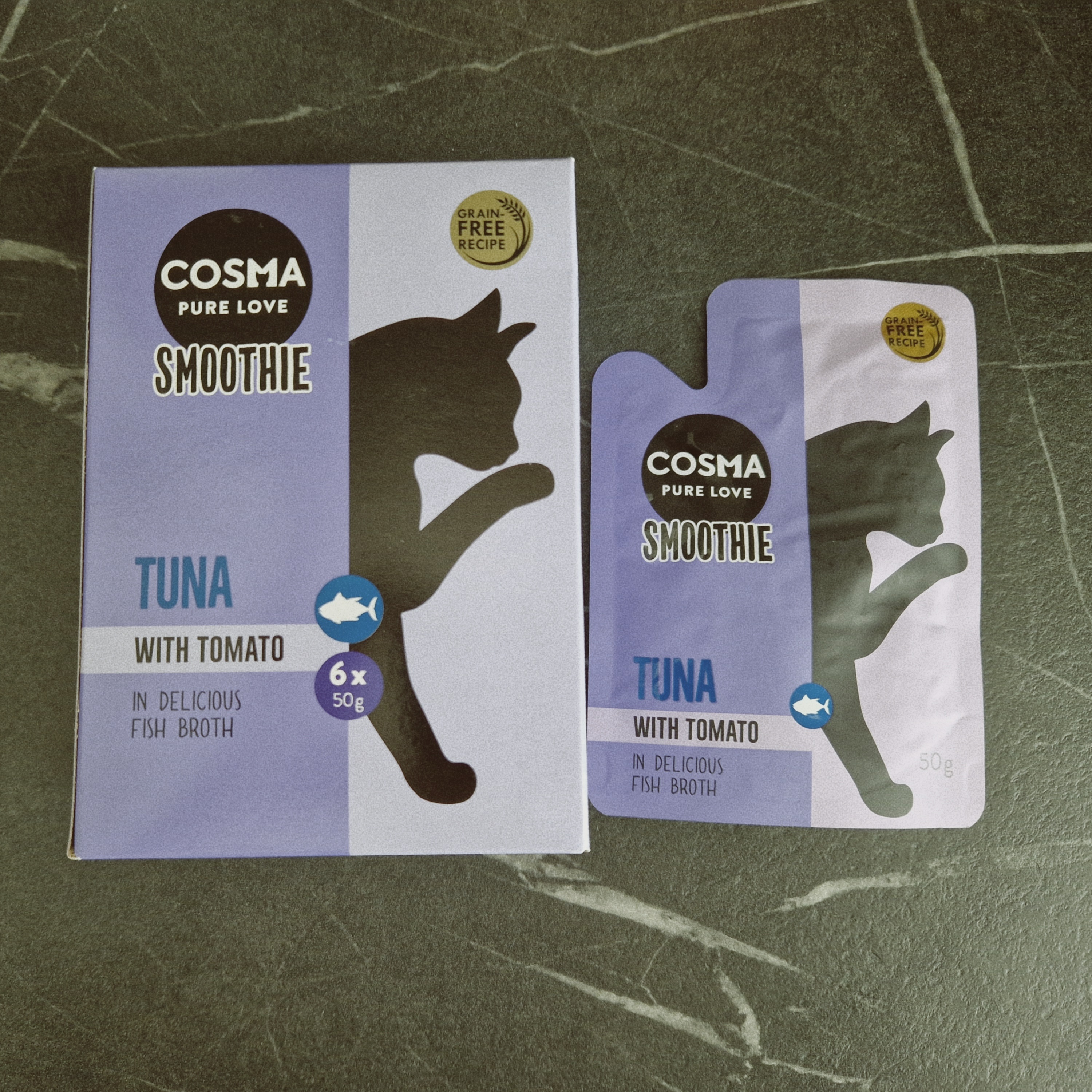
These are my favorites:
Cosma Smoothies
A creamy, grain free, sugar free, gluten-free smoothie made from meat and/or fish combined with vegetables like pumpkin, tomato and carrot, in a flavored chicken or fish broth. Available in three flavors: chicken with pumpkin, tuna with tomato, and tuna and chicken with carrot. No artificial colors, flavors or preservatives.
The broth base makes these particularly good for hydration: you’re essentially getting flavored liquid with a meaty smoothie consistency. Even Jupiter, who has opinions about most things, finds these hard to resist most of the time!
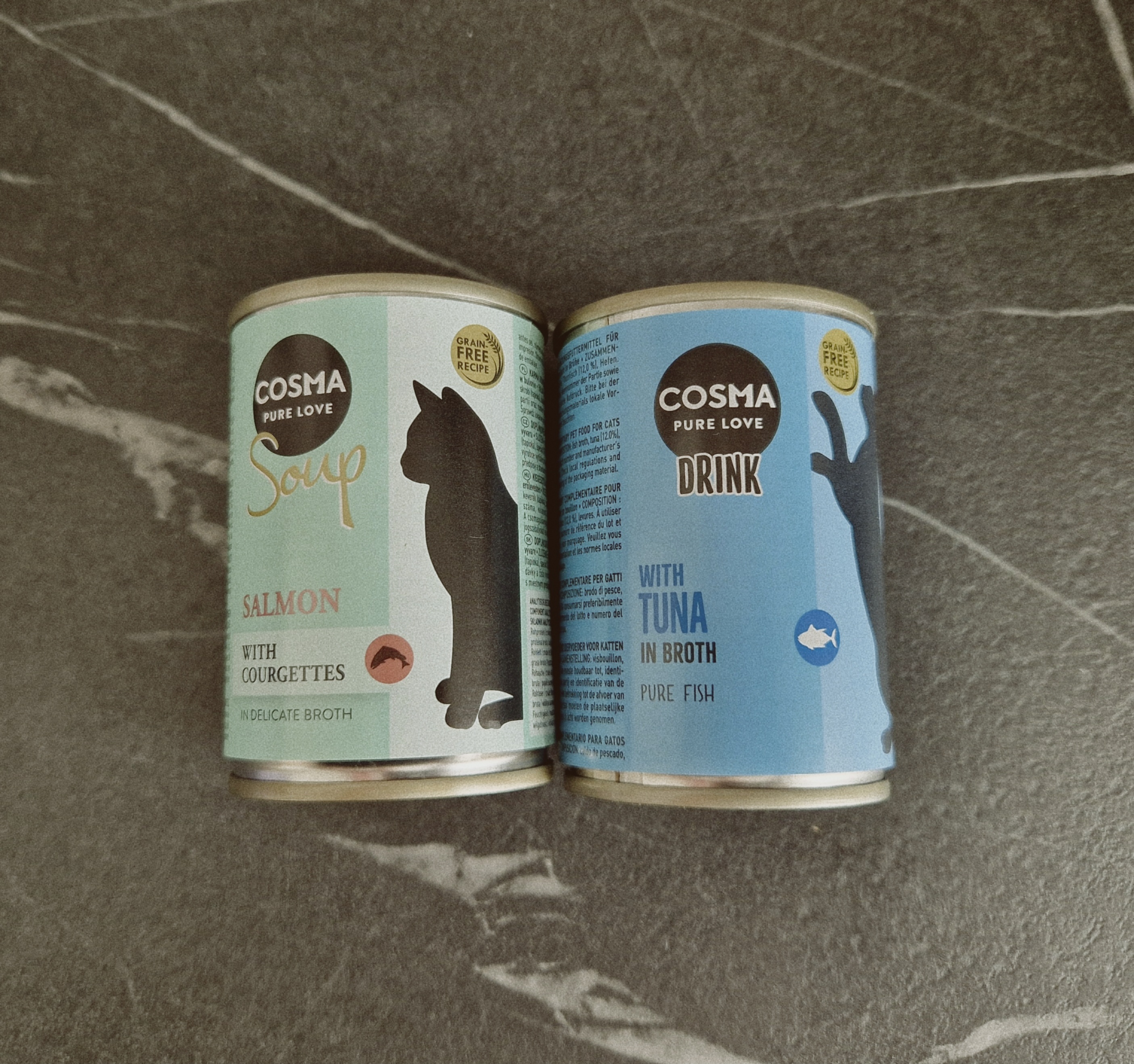
Cosma Soup
If the smoothies are the artillery, the soups are the full battalion! Cosma Soup comes in 100g cans in eight — EIGHT! — flavors, all made from high quality natural ingredients, grain free, no artificial additives, in a delicious meat broth. Flavors include chicken with pumpkin, salmon with zucchini, tuna with carrots, chicken and tuna with sweet potato, chicken and salmon with zucchini and carrots, chicken fillet with chicken liver and broccoli, tuna with green peas, and chicken with asparagus.
The variety is very useful for rotation purposes — eight flavors means you can go quite a while before repeating, which keeps even the most opinionated cats interested.
Cosma Drink
And completing the Cosma trilogy — because apparently Cosma is just really passionate about cat hydration — there’s also Cosma Drink. While the smoothies have a creamy consistency and the soups are broth-based with chunks of meat, the Drink is exactly what it sounds like: a pure liquid cat treat in a 100g can, made from meat or fish in a fine broth with absolutely nothing else added. No artificial additives, no grain, no fillers, just chicken stock and chicken breast, or fish stock and tuna, with a tiny bit of yeast. That’s it!
It comes in four flavors — chicken breast, tuna, chicken and chicken liver, and tuna and shrimps — and is probably the most straightforwardly hydration-focused product on this list, since it’s essentially just a very tasty liquid your cat drinks rather than eats. For cats who are reluctant to drink plain water but respond well to flavor, this is about as direct a hydration delivery system as you can get.
You can read more about Cosma brand here (it is available for purchase on Zooplus for European customers): Cosma
A note on broth
You’ll notice I haven’t mentioned broth as a standalone addition — and that’s simply because I haven’t tried it with Jupiter. He’s a picky eater, and plain water works perfectly well for him, so I’ve never felt the need to experiment with broth. But if your cat is a particularly reluctant drinker and the other tricks aren’t working, unsalted, onion-free, additive-free bone broth or cat-specific broth added to food or served alone is definitely worth trying. Many cats who turn their noses up at plain water will happily drink broth. Just make sure it’s specifically safe for cats as many human broths contain ingredients that are toxic to cats!
For North American readers
I’m aware that most of the products mentioned earlier in this post are primarily available through European retailers — not particularly helpful if you’re reading this from the US or Canada! So I spent more hours than I care to admit browsing Chewy while researching for alternatives, and I have to say: the North American cat treat market is something else entirely! The variety is staggering, and the product names are creative to say the least (Meowijuana, anyone? Haha!). I came across things I have not seen here in Europe, with keto cat treats being a particular highlight that sent me down the rabbit hole. Honestly, if I lived in North America, my cart would have gotten out of hand very quickly. Consider this your warning before you go in!
Anyway, the good news is that the North American market has excellent options in all the same categories as the European products above, most available on both Chewy and Amazon. The ones I’ve highlighted below caught my eye for the same reasons I choose European products — clean ingredient lists, limited or no artificial additives, high moisture content, and real meat or fish as the primary ingredient. If you find yourself browsing beyond these, there is no shortage of interesting things to discover!
Creamy treats
The creamy squeeze treat market in North America is impressive; there are a lot of options, and many of them are high quality. A few standouts worth knowing about:
Caru Daily Dish Smoothies deserve a special mention because they contain no gums of any kind, which is rare in this category and worth noting if your cat has any sensitivities. Simple, clean ingredients, for example: water, tuna, salmon, tapioca starch, sunflower oil, yeast extract. That’s it.
Nulo Perfect Purées are interesting because they contain inulin as a prebiotic fiber, so like the Wow Cat treats mentioned earlier, you’re getting a hydration boost AND a little gut support in one treat.
Acana Lickables stand out for their bone broth base and added omega-3s from algal oil — a slightly more nutritionally substantial option than a standard purée.
Other excellent options worth exploring: Tiki Cat Stix, Good ‘n’ Tasty Savory Spoonables, Blue Tastefuls Mini Purées, Fancy Feast Savory Purée Naturals, Love Nala Mouse, Tiny Tiger Lickables, and Weruva Puddy Pops. All are available on Chewy and Amazon, all have clean ingredient lists, and all work perfectly for the water mixing trick — squeeze into a bowl, add a tablespoon (or teaspoon!) of water, mix, serve. Your cat will never know!
Fish loins — the packet trick applies here too
The European fish loins I mentioned earlier have a good North American equivalent in Inaba Grilled Fillets — hand-cut tuna or chicken fillets vacuum-packed in broth, 71% moisture content, grain free, no artificial preservatives. Available in multiple flavors including tuna broth, scallop broth, crab broth and shrimp broth. And yes — the packet trick absolutely applies. Do not throw away that packet! Add a little water, swish it around, pour it over the fillet.
Other excellent loin options worth exploring: Reveal Natural Grain-Free Whole Tuna Loin, Reveal Whole Mackerel Loin, and Applaws Tuna Loin — all single ingredient or minimal ingredient, natural, and perfect for the packet trick.
Bone broth
Earlier I mentioned broth as an option for reluctant drinkers. And if you want to try it, Made by Nacho Cage-Free Turkey Bone Broth Topper is a great starting point. Made from responsibly sourced cage-free turkey, simmered to concentrate proteins, with inulin as a prebiotic and no artificial anything. Just shake and serve over food or as a standalone drink. Clean and simple.
As mentioned earlier, you can find all of these products on Chewy and Amazon.
The rotation tip
One thing I want to emphasize before we wrap up, because I think it makes a bigger difference than people realize: rotate. Do not give your cat the same thing every single day. And honestly, rotation is a good principle beyond just hydration — varying proteins and ingredients in your cat’s diet generally has benefits, from reducing the risk of food sensitivities to ensuring a broader nutritional profile. But that’s a rabbit hole we will explore another day!
Cats get bored, and Jupiter is a proof of it: a product he’s enthusiastic about on Monday may be viewed with indifference by Friday if it’s been served every day in between. By rotating between different options — a soup one day, a creamy treat with water the next, wet food with extra water the day after, a fish loin with packet juice after that — you keep things interesting and always have a backup option for the days when your cat has decided that today’s snack is suddenly inedible and needs to be avoided at all costs.
How to tell if your cat is dehydrated
Before we get to the end of this post, a quick practical note — because knowing the signs of dehydration is just as important as knowing how to prevent it!
The easiest check is the skin pinch test: gently lift the skin between your cat’s shoulder blades and release it. In a well-hydrated cat, it should snap back immediately. If it returns slowly or stays tented, your cat may be dehydrated and a vet visit may be warranted.
Other signs to watch for: lethargy, dry or tacky gums, sunken eyes, reduced or very dark concentrated urine, and loss of appetite. In summer especially, if your cat seems unusually quiet or inactive in the heat, check their hydration.
When in doubt — call vet, always!
Keeping your cat hydrated doesn’t have to be complicated or expensive. Most of the tricks in this post cost nothing extra — adding water to existing treats, swishing out packets, rotating what you serve… Small changes, consistently applied, make a real difference over time.
Jupiter, my enthusiastic water drinker who somehow still manages to have off days, is living proof that even the best drinkers can use a little help sometimes. And for the cats who need more encouragement — well, that’s what the packet trick is for!
Now go check your cat’s water bowl: when did you last change it?
— Asta
This post is based on personal experience and the sources below. For medical concerns about your cat’s hydration always consult your veterinarian.
Sources
Pierson, L.A. (2015). Feeding Your Cat: Know the Basics of Feline Nutrition. Veterinary Clinics of North America: Small Animal Practice. https://www.catinfo.org
Journal of Feline Medicine and Surgery (2016). Water intake and urinary parameters in cats fed dry vs wet diets.
Desert Descendants: Why Cats Need Moisture-Rich Diets. The Durango Herald (2024). https://www.durangoherald.com/articles/desert-descendants-why-cats-need-moisture-rich-diets-and-how-to-provide-it/
Stocker, R., Reis, P., Jung, S., Aristoff, J. (2010). How Cats Lap: Water Uptake by Felis catus. Science (published November 11, 2010). MIT, Virginia Tech and Princeton University. https://www.science.org/doi/10.1126/science.1195421
MIT News coverage of the study: https://news.mit.edu/2010/cat-lapping-1112
Can Cats See Water? Understanding Feline Drinking. PetsCare https://www.petscare.com/news/post/can-cats-see-water
Understanding Why Cats Avoid Drinking Water from Bowls. Viomi Hydration Lab (2025). https://water.viomi.com/blogs/hydration-lab/why-cats-avoid-water-bowls
Cornell University College of Veterinary Medicine — Chronic Kidney Disease. https://www.vet.cornell.edu/departments-centers-and-institutes/cornell-feline-health-center/health-information/feline-health-topics/chronic-kidney-disease
Quimby, J. DVM PhD DACVIM. Maintaining Hydration in Cats With CKD. Purina Institute. https://www.purinainstitute.com/centresquare/therapeutic-nutrition/maintaining-hydration-in-cats-with-ckd
Risk factors associated with the development of chronic kidney disease in cats. Journal of the American Veterinary Medical Association (2014). https://avmajournals.avma.org/view/journals/javma/244/3/javma.244.3.320.xml
What Are the Safest Cat Food Bowls? Homeless to Housecats (2026). https://www.homelesstohousecats.com/cat-care-tips/what-are-the-safest-cat-food-bowls
 Purring Pyjamas