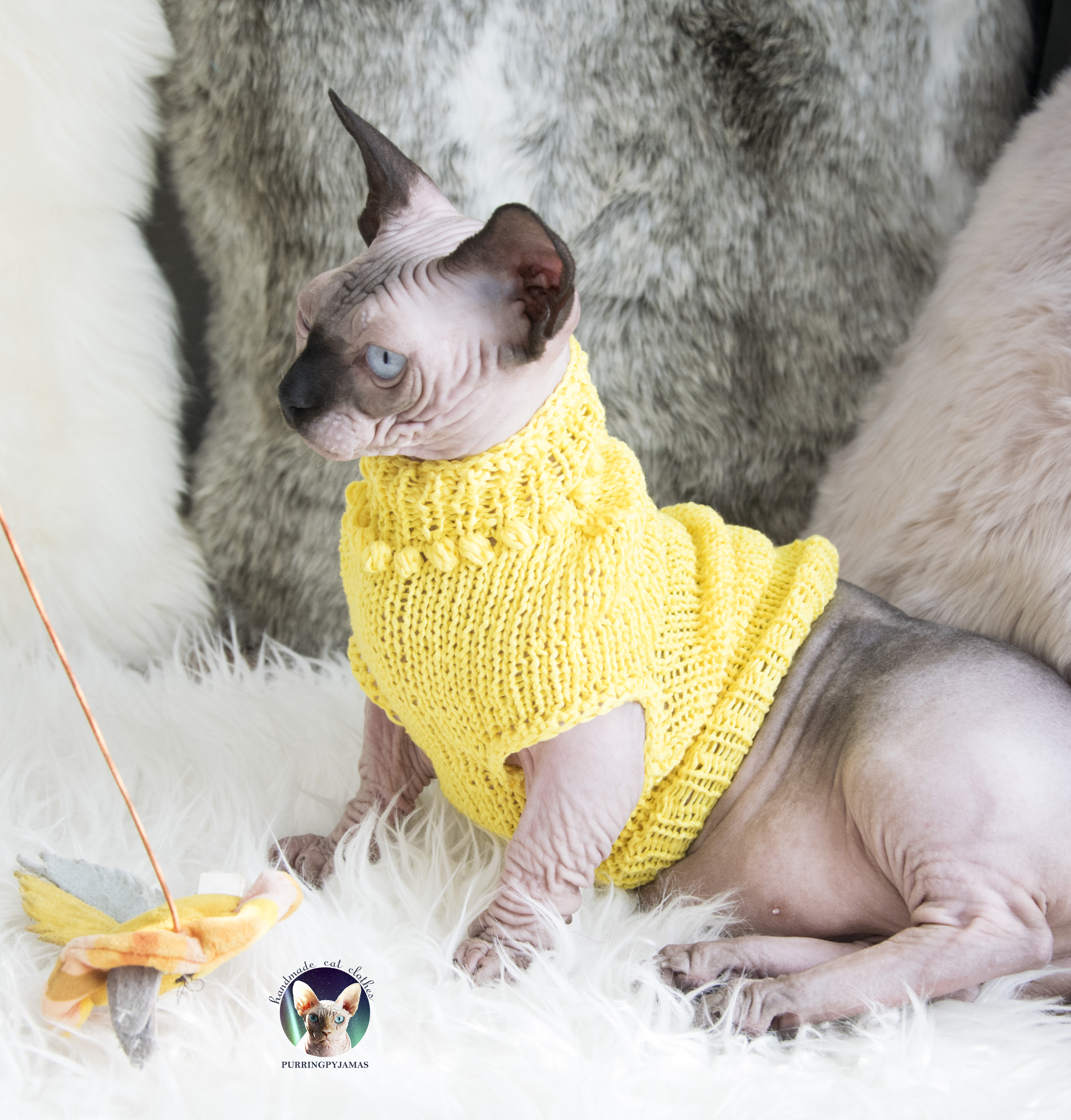
You Think Your Cat Hates Pet Clothes? How to Turn a “Nay” into a “Yay”!

Hello, everyone!

I hope you’re doing well!

Today, I want to talk about a question I get all the time: What if my cat hates wearing clothes? Even before the sweater arrives, many customers ask me how to make sure their cat will actually like it. And honestly? I totally get it.

We’ve all seen it: the cat goes stiff like a board, dramatically flops over, or starts doing that “drunk walk” when you try putting a sweater on them. One of my own cats, Beliza (Rest in peace, sweetheart!) – who happily modeled her knitwear – at first acted like she’d been personally betrayed by a piece of yarn. 😄 So how did she go from hating pet clothes to enjoying them?

Let’s talk about it.

Understanding Why Cats React the Way They Do

If your cat flops over like a fainting goat the second you dress them, don’t panic – this reaction is surprisingly common! Many cats freeze, crouch low, or even walk sideways when first wearing clothes, not because they hate you or the sweater, but because the sensation is unfamiliar and confusing.

According to feline behaviorists, this response is linked to what’s called a “defensive freeze” – a natural instinct when a cat experiences a sudden change in body sensation or restricted movement. In fact, studies on feline proprioception (the sense of body position) show that cats are especially sensitive to anything that alters their balance or touches their fur in unusual ways.

Think of it like putting on a wetsuit for the first time – it’s not painful, just weird! But with short, positive sessions (paired with affection and treats), most cats quickly realize they can move just fine and may even begin to associate their cozy sweater with comfort and safety.

So, how do you turn a kitty fashion crisis into a fashion success story? Let’s go over some simple but effective tips and tricks to help your cat go from “Nope!” to “Meow-del” in no time!
Treats, Treats, Treats

Treats are your secret weapon, and you’re the one holding them! Cats respond to positive reinforcement just like dogs do. So, when putting on or taking off the sweater, pair it with affection and their favorite snack. This helps your cat associate the experience with something good.

(A quick side note: Why don’t vet clinics offer cat treats like they do for dogs? We always bring our own. Cats deserve positive reinforcement, too!)

Keep It Short & Sweet

If your cat is new to clothing, don’t start with hours of wear. Begin with just 5 minutes, and gradually increase the time day by day. Always follow up with treats and praise. Within a week or so, your cat will likely feel more comfortable. It may seem like extra effort at first, but trust me, it pays off!

Pair It With Something Fun

Does your cat love a certain toy or game? Use it to your advantage! Playtime or affection while they’re wearing the sweater will help them focus on the fun rather than the unfamiliar feeling of the fabric.

Try the Sock Method First

You might be thinking, “Wait… aren’t you selling cat clothes?”
Yes, and I appreciate every single person who supports my small business. But I’ll always value honesty over a hard sell.

So here’s the real talk: before you invest in pet fashion, test the waters. Take an old sock, cut off the toe and make two small holes for the front legs. Voilà – your kitty has a practice sweater! You can do the same with the sleeve of an old shirt or sweater.

Just make sure it’s fitted, not tight, and always supervise your cat while they’re wearing it, especially if they’re new to the whole idea. This advice also applies to things like bandanas, collars, and harnesses.

Stretchy Fabric is Key

One of the reasons I hand-knit all my sweaters (besides the fact I’m obsessed with yarn) is because knitted fabrics are incredibly stretchy. Compared to fleece or jersey, handknit materials provide a more flexible and forgiving fit, which is especially important for active cats.

Also, my sweaters are seamless and lightweight to avoid bulk, helping even the most dramatic cat feel like their usual acrobatic self.

What Styles to Avoid for Beginners

When your cat is just starting out with clothes, it’s best to keep things simple and comfy. Avoid styles with hoods, full-length leg sleeves (especially ones that go past the elbow), or stiff seams that can limit natural movement. These extras may look cute, but they often feel overwhelming for a cat who’s not used to wearing anything at all.

Think of it like breaking in a new pair of shoes – you wouldn’t start with high heels! Go for sleeveless, soft, stretchy designs that let your kitty move freely and build confidence.

Want to dive deeper into finding the purrfect fit and style for your cat? I wrote a full post all about it – check out:
Dressed to Purrfection: A Complete Guide to Buying Cat Clothes

Signs Your Cat Is Getting Used to Clothing

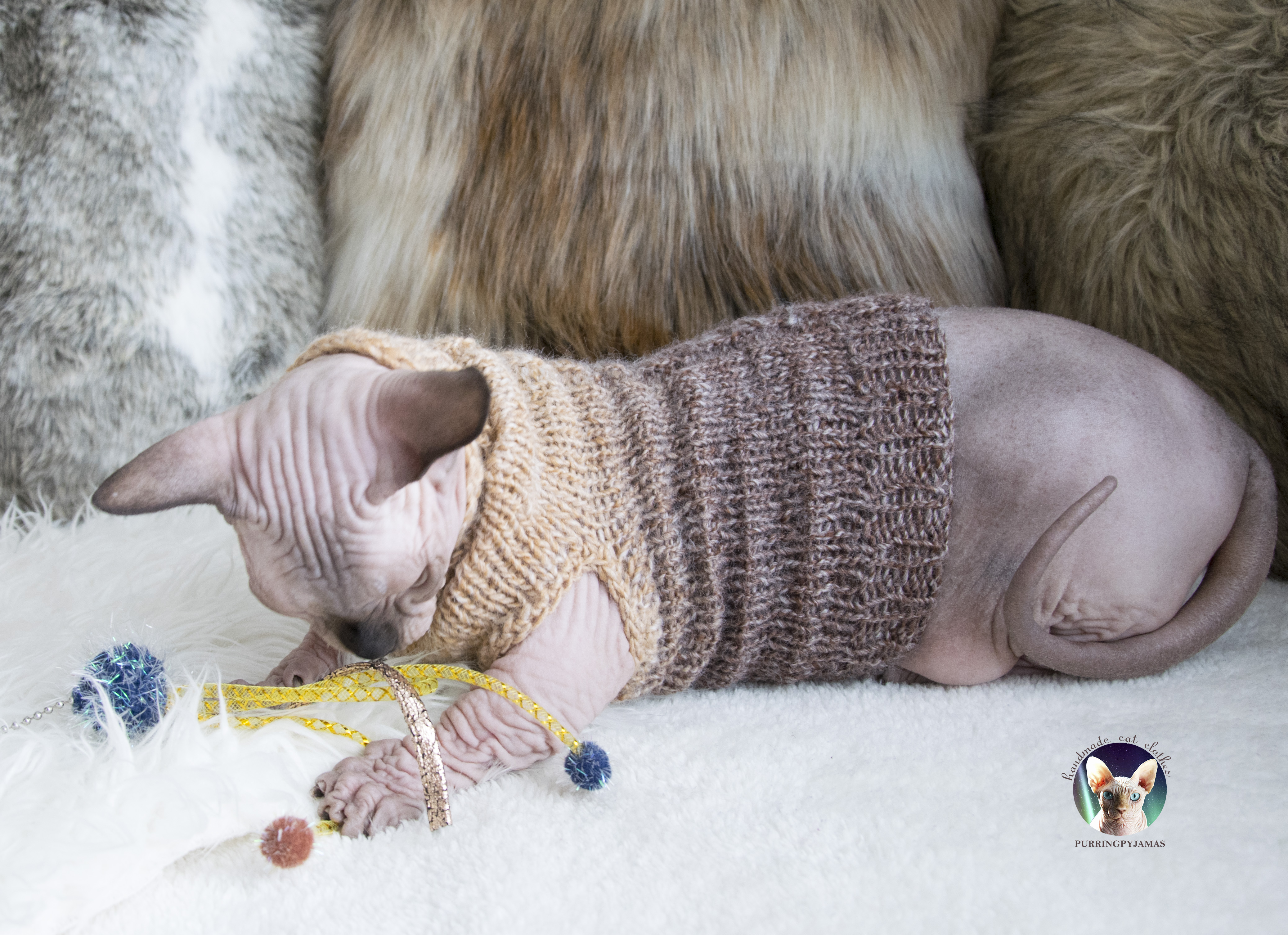
So how do you know your kitty is starting to get the hang of it? Look for small but meaningful signs – like walking around more confidently, grooming themselves while wearing the sweater, playing, or even curling up for a nap in it. These are all signs your cat is adjusting and beginning to feel at ease. It may not happen overnight, but it does happen – just be patient and consistent.
Celebrating Little Wins

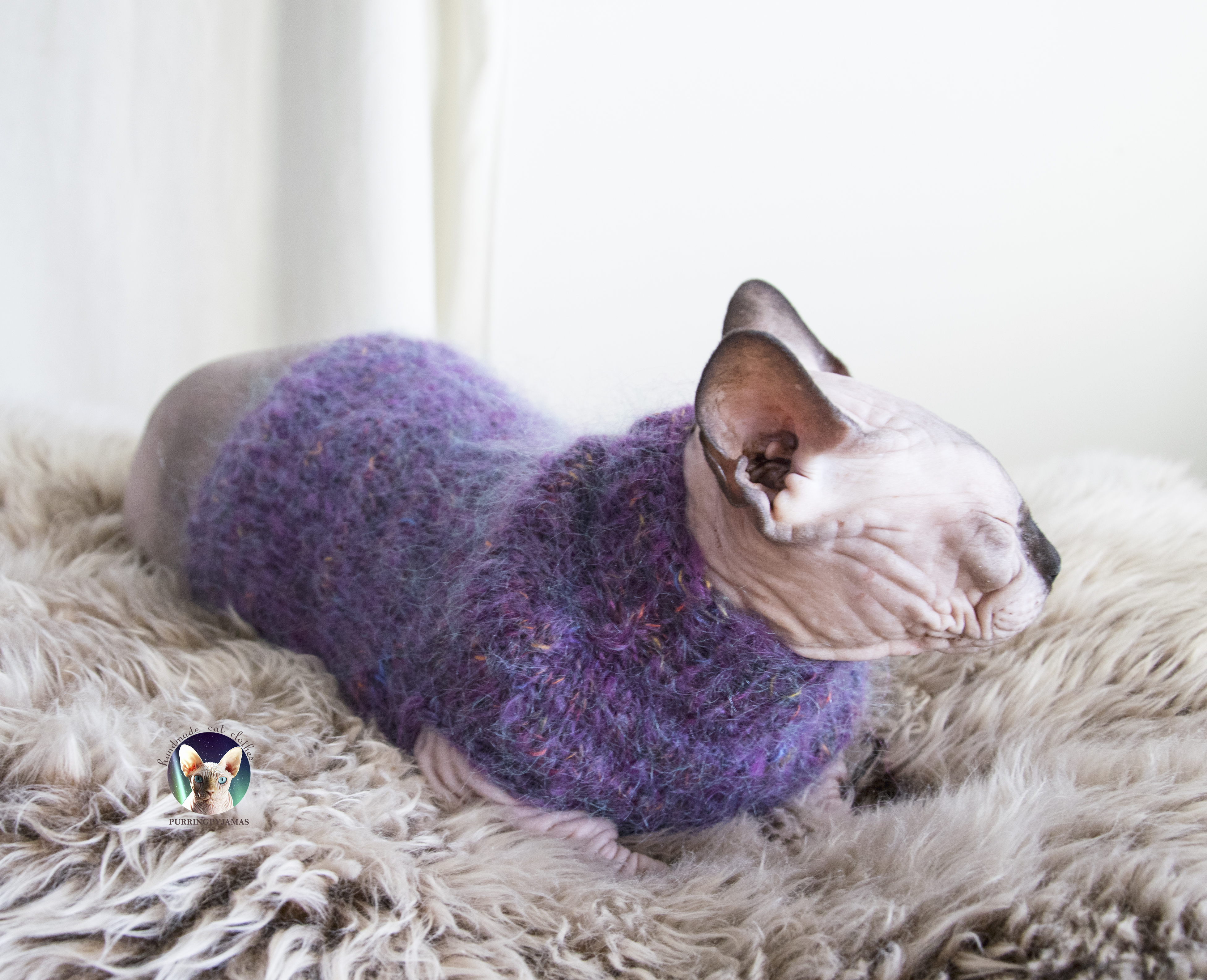
Every bit of progress matters! Whether your cat wears their sweater for five minutes without flopping over, walks a few steps confidently, or even just tolerates the dressing process a little better – those are all huge wins. You’re building trust, one treat and positive association at a time. Celebrate those small victories – they mean you’re well on your way!

I hope you enjoyed this week’s post and found it helpful! Whether you’re new to pet clothing or just looking to make the experience better for your kitty, remember: patience, positivity, and the right approach make all the difference. 💕

Follow PurringPyjamas on social media to keep up with the newest releases, discounts, never-ending Sphynx cuteness, and more!
📸 Instagram: instagram.com/purringpyjamas
📘 Facebook: facebook.com/purringpyjamas
🛍️ Shop: purringpyjamas.etsy.com

Purring wishes, Asta signature

Dressed to Purrfection: A Complete Guide to Buying Cat Clothes

Hello, everyone!

I hope your week wasn’t too harsh and you’re ready for a quick dose of cats! As I mentioned in my last blog post, today I’ll be talking about buying cat clothes — and how to make it an easy and positive experience. So let’s get into it and go over what to consider before dressing up your feline friend. 

Safety First

Let’s start with the most important factor: safety! And I don’t mean warmth or fit – I’m talking about the actual design of the clothing.

I often see sweaters decorated with beads, tiny buttons, and other embellishments, sometimes running from top to bottom or incorporated into cable knit patterns. Sure, they look beautiful… but have you considered that your cat might reach those decorations? Chew on them? Rip them off?

What happens if your cat swallows one?

That’s exactly why I only attach buttons at the neck, using a special stitch that:

  1. Keeps them out of reach from curious paws and teeth
  2. Secures them so strongly that the sweater will wear out long before the button ever comes loose (tested and confirmed by my own cats!)

So whenever you see something cute, take a moment to ask: is it also thoughtfully designed and safe? Your cat’s safety should always come first.

Sleeves or Sleeveless? Or One Hole for Both Legs?

I touched on this in my last post, but here’s a quick recap:

  • If it’s your cat’s first sweater or they’re unsure about wearing clothes, go sleeveless.
  • If your cat’s comfortable in clothing, feel free to explore other designs.
  • Sweaters with a single hole for both front legs can also work well – I’ve made several custom orders like that. Just make sure they’re made of something very stretchy (like knit) to avoid restricting movement.

Always Check the Size Chart

I can’t stress this enough: always check the shop’s size chart! Every brand is different. Just because your cat wears a Medium from one shop doesn’t mean they’ll wear the same in another. For example, my sizes run large – if your cat is a Medium somewhere else, there’s a good chance they’ll need an XS or S in my shop.

Most of the few 1-star reviews I’ve received came from people who didn’t check the size chart. And that leads us to…

If Your Cat Is Between Sizes, Request a Custom Order

Yes, that’s a thing – and it happens more often than you’d think! Many shops offer custom sizing, so don’t hesitate to ask. Personally, I offer custom sizes at no extra charge. Other shops may charge a small fee. Either way, don’t settle for something that doesn’t fit well.

When in Doubt, Ask

If you’re unsure about sizing, always reach out to the seller. Trust me, they won’t think you’re silly. Shopping for cat clothes can be just as tricky as buying jeans for yourself (if you know, you know ). Better safe than sorry!

What About Sweater Length?

You may have noticed I don’t list exact sweater lengths in my size chart. That’s because each design is different – some are longer, some are shorter. In general, my sweaters tend to run on the longer side (which you’ve probably seen in my product photos).

If you need a specific length, just reach out! I’m always happy to adjust made-to-order sweaters based on your preferences.

Sewn vs. Knitted Cat Clothes

If you’ve been browsing different shops, you may have noticed:

  • Handmade knitwear tends to be more expensive
  • Those shops usually have fewer listings

Here’s why – especially from the perspective of someone in Finland (aka not the cheapest place to source materials!):

  • Yarn is often more expensive than fabric. Fancy yarns like alpaca or mohair can be especially pricey.
  • Sewing is faster. Even as a fast knitter (and a very average sewer), I can make several sewn shirts in an hour… but knitting one sweater might take me 4 hours or more, depending on the design and size.

And I’m talking about hand-knitting here – no machines involved!

Knitted vs. Fleece/Jersey: What Should You Choose?

That’s completely up to you!

  • Knitted cotton is great for summer
  • Wool or thick acrylic is ideal for winter
  • Knitwear is usually stretchier and more comfortable than fleece
  • Both fleece and wool are warm

Choose what fits your cat’s needs and personality best.

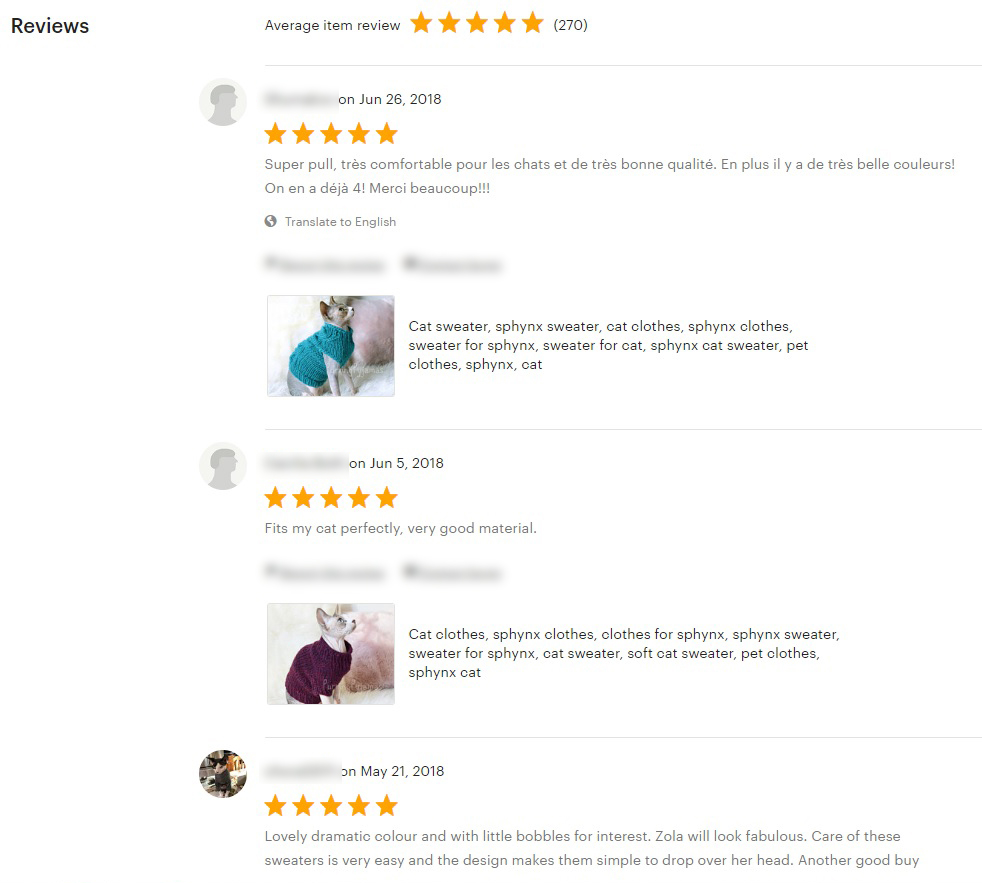
Check the Shop’s Reviews

Not just the star rating – look at how the seller handles negative feedback. It’s easy to be lovely when everyone’s happy, but what happens when a buyer isn’t satisfied? If a shop has 1-3 star reviews and no responses under them, that’s a red flag. And if there is a response, read it. Is it polite? Helpful? Defensive?

A good shop owner should be ready to resolve issues and communicate professionally.

If There’s a Problem, Contact the Seller First

Some of the rare negative reviews I’ve received were left without warning. The buyer didn’t check the size chart, the sweater didn’t fit, and instead of reaching out, they just left a bad review. I make each sweater based on the size ordered – I don’t know the cat’s actual measurements unless the customer tells me. I assume people read the listing and reach out if they have questions.

I also have a fair return policy and always try to resolve things. So please, if something’s off, just message the seller first. In most cases, there’s a solution!

And… Leave a Review!

Reviews help small businesses so much – especially thoughtful ones! Reflect on:

  • Was the item well made?
  • Was the sizing accurate?
  • Was the seller helpful?
  • Did they handle any problems professionally?

Your feedback helps others shop smart – and supports independent makers like me.

Return & Exchange Policies

Always make sure to read a shop’s return and exchange policies before placing your order. It’ll save you from any unnecessary disappointment or misunderstandings down the line.

As someone based in the EU, I offer returns and exchanges within 14 days of receiving your order. That means you have two weeks to decide if you want to keep or return the item. If returned in its original, unused condition, I’ll issue a full refund. Prefer an exchange instead? Just send the original item back and share a shipping receipt – I’ll send out a new one as soon as it’s on its way!

Most shops (including mine) don’t offer returns or exchanges on custom-made items. Why? Because they’re made just for you. In my shop, I work closely with you on every detail of the custom order. You get photos before shipping, and everything – from measurements to yarn and design – is discussed beforehand. These aren’t mystery items; they’re made-to-measure. And FYI: I don’t charge extra for custom orders! What affects the price is the material – for instance, cashmere will be pricier than standard lamb’s wool yarn, simply because the material itself costs more.

A quick PSA:

Some shops try to bypass return rules by labeling “made-to-order” items as “custom” so they don’t have to accept returns. But let’s be clear – made-to-order is not the same as custom. A custom item is designed specifically for one cat, with unique measurements and materials. Made-to-order just means the item is created once the order comes in – but it’s still a standard size/design. I personally avoid shops that pull that trick. Some even cite “hygiene” as a reason to deny returns – which makes little sense. Imagine ordering jeans, they don’t fit, and the store says, “Sorry, no returns due to hygiene”? Yikes. Most pet stores allow returns on unused items with tags – and online shops should, too.

Measuring Tips

Always use a soft measuring tape to take your pet’s measurements. Different shops require different info, but in my case, the chest circumference (right behind the front legs) is key. Knit fabric is very stretchy, so it naturally adjusts to little belly variations. If your cat has a noticeably rounder tummy, just let me know – I’ll happily add a bit of extra room to the belly area at no extra cost.

No tape measure? No problem. Use a piece of string or ribbon to take the measurement, then lay it flat against a ruler to find the length.

Don’t measure too tightly. For hairless cats, measure directly against the skin – snug but not constricting, just like you’d measure yourself. For furry friends, I recommend slipping a pinky finger between the tape and their body to account for their fluff. The thicker the coat, the more space you’ll want to allow for comfort.

Materials & Allergies

Most cats tolerate wool really well. While it can feel a bit scratchy at first, it softens considerably with wear and washing. I have many friends whose cats – Sphynx included – wear wool regularly without any issues.

My own cat, Jupiter, has sensitive skin due to past stress-related overgrooming. He does well with most wool types, but lambswool feels a bit rough for him. That doesn’t mean all wool is off the table! He wears alpaca with zero irritation, and I’ve found many sensitive cats do best with finer fibers like merino, alpaca, mohair, llama, or even cashmere (if your wallet is feeling fancy).

Plant-based fibers like cotton, bamboo, viscose, and linen are also wonderful choices – soft, breathable, and hypoallergenic. Synthetic options (like acrylic or polyester blends) are generally safe for sensitive skin, though they’re less environmentally friendly.

My shop has hundreds of sweaters in a wide range of materials. I always recommend something with at least a touch of natural fiber – whether it’s wool or plant-based – because of their comfort and functionality.

A quick love letter to wool: it’s breathable, moisture-wicking, odor- and fire-resistant, naturally elastic, and surprisingly easy to care for. Plus, wool is a renewable resource, and sheep need to be sheared for their health – modern breeds can’t properly shed on their own, so skipping shearing can cause heat stress, parasites, and matting. Wool’s not just smart; it’s sustainable.

Coming Soon: A Full Care Guide for Hand-Knit Catwear!

One of the most common misconceptions I hear is that hand-knit sweaters – especially wool ones – are high-maintenance and tricky to wash. Spoiler alert: they’re really not! With the right care (and no, it doesn’t involve fancy detergents or hand-wringing your soul out), your kitty’s sweater can stay soft, fresh, and last for many cozy seasons to come.

Stay tuned – I’m currently putting together a full blog post with simple, step-by-step care instructions, myth-busting tips, and a list of products I personally use to keep my handmade pieces in tip-top shape.

(And yes, there will be photos. Jupiter insists on modeling.)

I hope this guide was helpful! I have something fun planned for the next post, so stay tuned – and have a lovely week ahead. 


Follow PurringPyjamas on social media to keep up with the newest releases, discounts, never-ending Sphynx cuteness, and more!
📸 Instagram
📘 Facebook
🛍️ Shop on Etsy

Purring Wishes - Signature